
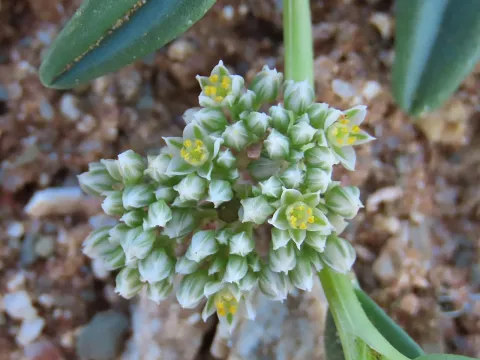
Limeum
Limeum
Limeum is a specialized crop adapted to arid environments, and its sowing timing is strictly dictated by the onset of the rainy season. Seeds should be planted when soil temperatures are consistently above 20°C to ensure rapid and uniform germination across the field.
What the section contains


Limeum
Due to the small size of the seeds, a shallow planting depth of approximately 1 to 1.5 centimeters is recommended. Deeper sowing can lead to premature exhaustion of the seedling's energy reserves before it reaches the soil surface.
The optimal seeding density depends on the purpose of the crop; for forage production, higher densities are used, whereas seed multiplication requires wider spacing to prevent resource competition. Precision seeders are preferred to ensure even distribution and uniform depth.
Effective seedbed preparation is crucial; the soil must be fine-tilled to ensure good seed-to-soil contact. After sowing, slight soil compaction is advised to retain moisture around the seed, facilitating the initiation of biological processes.
Weed management during the emergence phase is essential for successful establishment. Once the seedlings reach the four-leaf stage, the crop develops a robust root system and becomes more resilient against competition from surrounding vegetation.
Limeum is a member of the Molluginaceae family, characterized by its remarkable ability to thrive in extreme heat and moisture-stressed conditions. Its botanical structure is optimized for water retention, making it a highly valuable asset in semi-arid agricultural systems.
The crop performs best in well-aerated sandy or loamy soils. It has a low tolerance for heavy, waterlogged clay soils, which promote root asphyxiation and significantly increase the risk of disease incidence in the root zone.
Light intensity is a primary driver of Limeum development. It requires high solar radiation to maximize biomass production and support the biochemical pathways necessary for its drought resistance mechanisms.
Regarding soil fertility, Limeum is relatively undemanding, though it benefits from adequate levels of potassium and magnesium. These elements contribute to the plant's cellular osmotic potential, enhancing its survival under prolonged dry spells.
The crop exhibits significant tolerance to soil salinity, allowing it to be integrated into marginal land usage programs. It does not require intensive irrigation, and excessive watering should be strictly avoided to prevent physiological disorders.
Root rot, primarily caused by fungal pathogens such as Fusarium and Rhizoctonia, represents the most significant threat to Limeum stands. These conditions are almost exclusively triggered by poor drainage and water stagnation within the root zone.
Insects, particularly nocturnal larvae like cutworms, may graze on the foliage and stems of young plants. Integrated pest management strategies, focusing on biological controls and regular field monitoring, are effective in maintaining damage below economic thresholds.
Spider mites can become a problem during intense heat waves, especially when the plant is under moisture stress. Maintaining field hygiene and removing potential host weeds around the perimeter can prevent these infestations from spreading.
Viruses and bacterial pathogens are rare but can be transmitted by sucking insects such as aphids. Field scouting for vectors is necessary to prevent widespread infection, especially during the early stages of plant growth.
Environmental stress, specifically sudden temperature drops or unseasonable humidity, can weaken the crop's natural defenses. Providing adequate space between plants to allow for airflow is a key preventive measure against fungal outbreaks in the foliage.