
Limeum linifolium
Limeum linifolium
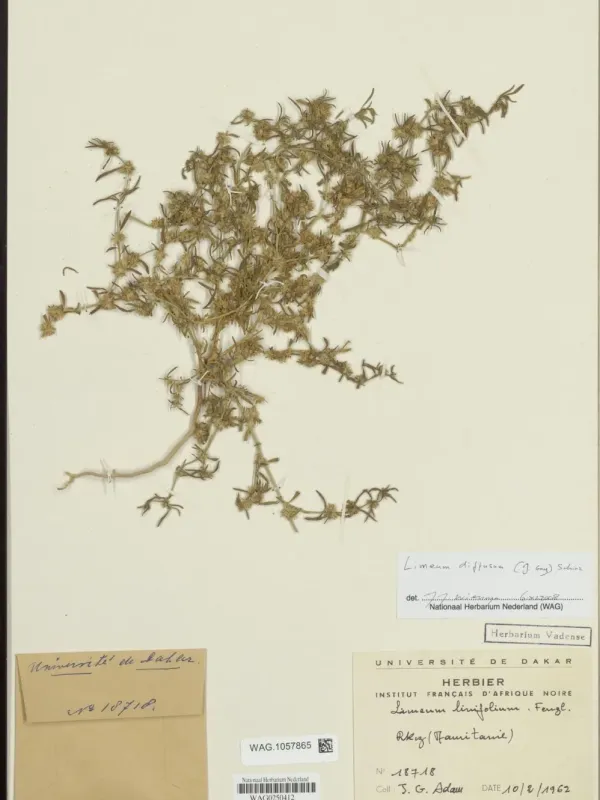
Description
Growing requirements
Limeum linifolium is a unique plant species belonging to the family Limeaceae. It is naturally adapted to arid and semi-arid environments, demonstrating a remarkable ability to thrive in challenging climatic conditions where most crops fail.
The plant exhibits distinctive flax-like leaves, which provide it with an adaptive advantage in minimizing transpiration. Its structural morphology allows it to utilize available soil moisture efficiently during short rainy seasons.
In terms of soil requirements, Limeum linifolium favors well-drained, sandy, or gravelly soils. It does not tolerate waterlogging, as its root system is highly sensitive to hypoxia and can easily rot in overly saturated, heavy clay environments.
The plant requires high levels of solar radiation and is well-suited to regions with extreme heat. Its metabolic processes are optimized for arid environments, making it a subject of interest for sustainable agricultural development in desert-adjacent areas.
Agricultural use of this crop is primarily focused on its value as a resilient forage resource. Its ability to produce biomass under low-water conditions makes it a potential candidate for pasture improvement in marginal agricultural zones.
Main diseases and pests
The primary threats to Limeum linifolium health include fungal pathogens triggered by poor air circulation and excessive soil moisture. Root rot is particularly prevalent in areas where drainage is insufficient to prevent water accumulation.
Insect pests such as locusts and various beetles are known to feed on the foliage of this species. These pests can significantly reduce the overall forage quality and biomass yield if infestations are left unmanaged during the peak growing season.
Weed competition is a significant challenge during the seedling stage. Given that Limeum linifolium develops relatively slowly initially, it requires a clean field to ensure it can successfully establish its root system before canopy closure.
Soil-borne diseases pose a recurring risk, especially if crop rotation cycles are neglected. Implementing diverse rotation strategies is essential to prevent the buildup of pathogens that can hinder the development of the root system.
Monitoring the moisture levels in the soil is the most effective management strategy to mitigate the majority of fungal diseases. Proper spacing and site selection for planting help maintain the health and vigor of the crop stands.