
Limeum fenestratum
Limeum fenestratum
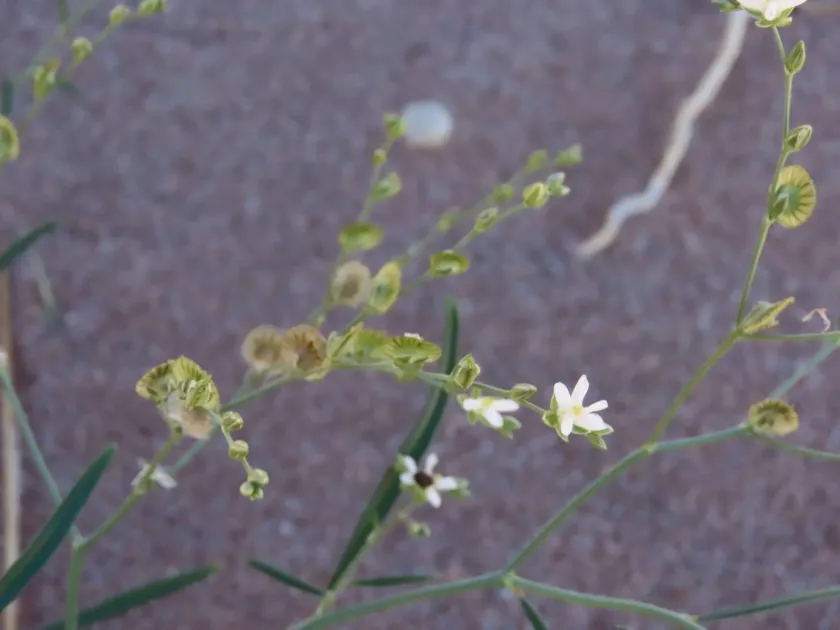
Description
Growing requirements
Limeum fenestratum is a distinct herbaceous plant belonging to the Limeaceae family. It exhibits specific adaptations to xeric environments, often displaying succulent traits that assist in moisture retention during long dry spells.
Originating from Southern Africa, this species thrives in arid and semi-arid regions. Its natural distribution demonstrates an evolutionary focus on surviving in regions with irregular rainfall and high temperatures.
Regarding soil requirements, the plant prefers well-drained, sandy, or gravelly substrates. It is particularly noted for its ability to grow in saline soils where other conventional crops fail to establish a healthy root system.
Climatic conditions for this crop must include high solar radiation and warm temperatures ranging from 20°C to 30°C. Cold sensitivity is a major factor, as the plant is not adapted to frost or freezing temperatures.
Agricultural utility is primarily focused on grazing. It serves as a vital forage component in African rangelands, providing nutrients to livestock in environments where biomass production is typically very low.
Main diseases and pests
The most significant threats to Limeum fenestratum are fungal pathogens. These are primarily associated with waterlogged soil conditions, which lead to rapid root decay and plant mortality.
Pests such as grasshoppers and other chewing insects are known to cause mechanical damage to the foliage. Such herbivory can significantly reduce the nutritional yield of the plant population.
Root-knot nematodes present a hidden threat, particularly in soils where the same crop is grown repeatedly without crop rotation or soil management.
Invasive weed species can outcompete Limeum fenestratum during the seedling stage. Early season weed control is essential for ensuring successful establishment and crop density.
Overgrazing remains the main environmental threat, as excessive pressure prevents the plants from reaching the seeding stage and depletes the soil nutrient reserves necessary for regrowth.