
Limeum diffusum
Limeum diffusum
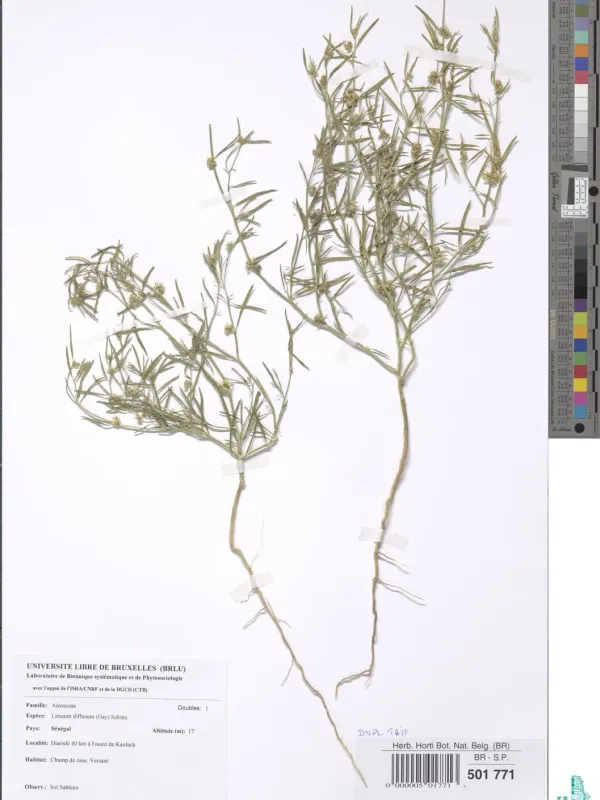
Description
Growing requirements
Limeum diffusum is a perennial herbaceous plant belonging to the Limeaceae family. It is a highly specialized species adapted to thrive in extreme arid environments, functioning as a vital component of desert ecosystems.
Originating primarily from the arid regions of Southern Africa, this plant is naturally dispersed across sandy plains and desert landscapes. Its evolutionary development has favored the survival of individuals capable of tolerating long periods of drought.
The plant exhibits a prostrate growth habit, which helps in shading the soil surface and conserving moisture. Its small, resilient leaves are structured to minimize water loss through transpiration, a key feature for its survival in desert heat.
Soil requirements for Limeum diffusum are specific: it demands well-drained, sandy or gravelly soils. It does not tolerate waterlogging, which is lethal for its root system, requiring excellent permeability in the substrate.
In terms of agricultural utility, the plant is primarily evaluated for its role in soil stabilization and as a niche forage resource in extremely arid zones where conventional crops fail to establish.
Main diseases and pests
The primary threats to Limeum diffusum are fungal pathogens that thrive in conditions of excessive soil moisture. Even brief periods of water saturation can lead to collar rot and complete destruction of plant populations.
Pest pressure mainly stems from generalist phytophagous insects. In its native range, locust outbreaks pose the most significant risk, as these insects can consume the vegetative tissue entirely, leaving the plants unable to recover quickly.
Viral diseases represent another potential threat, often spread by insect vectors during the short growing seasons. Prevention relies heavily on maintaining a balance where plants are not stressed by environmental factors that weaken their natural resistance.
Pathogen development is strongly correlated with high humidity levels. Therefore, agronomic management focuses on providing a dry, arid environment and ensuring adequate space between plants to allow for airflow and quick drying of the foliage.
Monitoring for signs of decay is crucial during infrequent rain events. Keeping the rhizosphere dry and preventing the accumulation of stagnant water are the most effective strategies for maintaining the health of this desert-adapted species.