
Irvingia
Irvingia
Irvingia, commonly known as African mango or wild mango, belongs to the family Irvingiaceae. Native to the tropical forests of West and Central Africa, these trees are vital components of their ecosystems and play a significant role in local food security.
What the section contains


Irvingia
The crop thrives in hot, humid equatorial climates. It requires consistent temperatures between 25°C and 30°C throughout the year and high rainfall. It is sensitive to cold spells and prolonged droughts, restricting its commercial viability to specific tropical zones.
Successful cultivation requires deep, fertile, and well-drained soils with good organic content. Soils with a slightly acidic to neutral pH are ideal. Adequate drainage is essential, as the roots are susceptible to damage from waterlogging in stagnant soil conditions.
Agrotechnical practices involve providing shade to saplings during their initial growth stages to protect them from intense direct sunlight. As trees mature, they become more resilient but still benefit from regular mulching to retain soil moisture and reduce weed competition.
Proper spacing is crucial for orchard management. Young trees need sufficient room to develop a balanced canopy. Regular monitoring of the soil nutrient status and the application of balanced organic fertilizers can significantly enhance tree vigor and subsequent crop yields.
Irvingia trees typically have a long juvenile period when grown from seeds, often taking over a decade to reach their first significant harvest. However, modern grafting techniques have reduced this period to 5–7 years, making plantation management more profitable.
A mature, well-maintained tree can yield several hundred fruits per season. Yields fluctuate depending on the specific cultivar, local rainfall patterns, and the success of pollination, which is often facilitated by local insect pollinators.
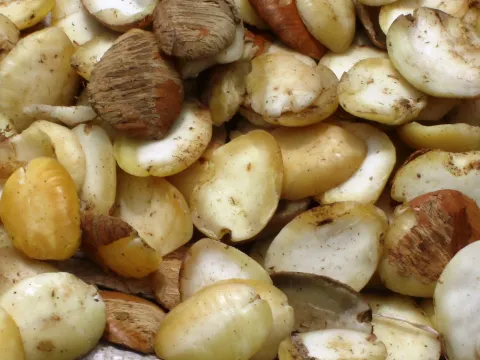
The primary economic output is the seed, encased in a hard, fibrous husk. These seeds are rich in essential fatty acids, proteins, and minerals, making them a highly valued commodity for both domestic food preparation and the global nutraceutical market.
Breeding efforts are currently focused on selecting high-oil varieties and trees that produce fruit with larger kernels and easier-to-process husks. Improved genetic selection is vital for stabilizing production in the face of changing climate patterns.
For optimal productivity, growers are encouraged to implement systematic irrigation during the dry season. Even minor supplementary watering can prevent premature fruit drop and ensure that the seeds attain their full weight and nutrient density.
Fruit flies represent the most significant pest threat to Irvingia, as their larvae burrow into developing fruits. Integrated pest management (IPM), including the use of pheromone traps and fruit bagging, is essential for minimizing crop loss in commercial orchards.
Fungal pathogens can cause root rot or trunk decay, particularly in orchards with poor drainage. Maintaining good sanitation by removing infected branches and ensuring adequate airflow through the canopy are critical preventative measures.
Epiphytes, such as mosses and parasitic plants, can infest mature trees, draining energy and nutrients. Periodic manual cleaning of the trunks and lower branches is recommended to ensure the tree remains healthy and productive over its long lifespan.
Leaf-eating caterpillars and beetles can occasionally cause damage to young foliage, slowing growth rates. Scouting programs allow farmers to identify early infestations and apply appropriate, environmentally friendly controls.
Mechanical damage to the bark during harvest or pruning can leave the tree vulnerable to secondary infections. All pruning tools should be sanitized regularly to prevent the spread of disease between individual trees within the orchard.
Harvesting Irvingia is a meticulous process, primarily involving the collection of naturally fallen fruit. Fallen fruit is generally at the peak of maturity, though it must be gathered quickly to prevent spoilage or contamination by soil-borne microbes.
Post-harvest processing involves removing the soft, fleshy pulp, which is highly perishable. The kernels are then carefully extracted from the fibrous endocarp, which requires the use of specialized tools or traditional manual methods.
Drying the kernels is a critical step to ensure a long shelf life. The seeds are spread in thin layers under the sun to reduce moisture content to safe levels, which effectively prevents fungal growth and maintains the quality of the fats within.
Proper storage involves keeping the dried kernels in a cool, dry, and ventilated environment. High-quality packaging is used to prevent the absorption of humidity, which could lead to rancidity of the seed oils over time.
The final product, often traded as "dika nut" or processed into a powder, serves as a staple ingredient for thickening soups and stews in regional cuisines. Sustainable harvesting practices help ensure that the wild populations remain viable while supporting the livelihoods of local farmers.