
Turtle grass
Thalassia testudineum
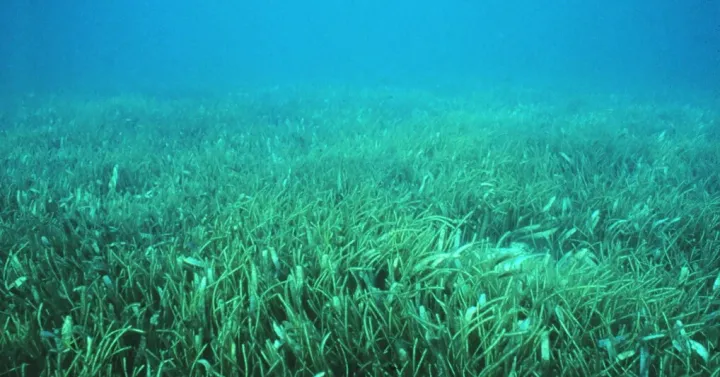
Description
Sowing dates
Turtle grass (Thalassia testudineum) is a perennial marine flowering plant of the Hydrocharitaceae family, rarely cultivated on a commercial scale through traditional seeding. In nature, the primary method of propagation is vegetative via the development of a dense rhizome system, which allows the plant to form extensive meadows.
In coastal ecosystem restoration projects, experts employ a sod transplant method. Fragments of healthy meadows are carefully harvested and relocated to prepared areas of the seabed, where they are secured using biodegradable meshes or anchors to prevent displacement.
Spring is considered the optimal time for restoration works, as rising water temperatures stimulate active root development. Nevertheless, operations can proceed throughout the year provided that water clarity allows for effective monitoring and site preparation.
Successful establishment depends on selecting sites with minimal wave energy and optimal water depth. The plant is extremely sensitive to physical trauma, so the transplant process must be performed with extreme care to maintain the integrity of the rhizome.
Soil composition is a vital success factor. Thalassia prefers stable, moderately silty substrates rich in organic matter that can retain moisture and essential mineral compounds required for steady growth.
Growing requirements
Healthy development of Thalassia testudineum requires high solar irradiance, as this submerged plant relies heavily on active photosynthesis. The optimal depth for growth ranges from 1 to 10 meters, depending on the transparency of the water column.
Water temperature is a critical limiting factor; the plant thrives at temperatures between 20 and 30 degrees Celsius. Sudden cold spells or extreme thermal spikes can significantly depress metabolic processes and inhibit growth.
The species exhibits moderate salt tolerance and prefers typical marine salinity ranging from 25 to 35 parts per thousand. Fluctuations outside this range may negatively impact leaf development and the capacity for generative reproduction.
Soil requirements involve the presence of fine-grained sandy or muddy sediments with low acidity. Thalassia actively extracts nutrients from bottom sediments, making the presence of phosphorus and nitrogen in the substrate highly desirable for meadow density.
The most important agronomic aspect is maintaining water quality. Pollution from suspended solids reduces light penetration, which often leads to the death of Thalassia populations because the plant cannot meet its energy requirements through photosynthesis.
Yield
Productivity in turtle grass is measured by biomass growth rates and bottom coverage density. Under favorable conditions, a meadow can expand by several tens of centimeters per year due to the rapid spread of its robust rhizomes.
In the context of ecological restoration, yield is evaluated by the survival percentage of transplanted fragments. Highly efficient protocols allow for 70–80% survival rates within the first year after introduction to prepared marine sites.
The plant plays a crucial role in carbon sequestration, acting as a powerful sink for atmospheric CO2. This utilization is gaining traction within the "Blue Economy" as a method to offset carbon footprints and improve water health.
Commercially, Thalassia is valued as a vital food source for marine fauna, including sea turtles and manatees. In areas with high animal density, turtle grass biomass forms the foundation of the coastal food web.
An additional benefit is the stabilization of shorelines. The root system effectively anchors bottom sediments, preventing coastal erosion and protecting sensitive areas from the destructive impacts of storm surges.
Main diseases and pests
Primary threats to populations include anthropogenic impacts, such as nutrient-rich sewage discharge causing eutrophication. An excess of nutrients stimulates algal blooms that shade out the seagrass, depriving it of essential light.
Physical damage from vessel traffic is another major risk factor. Shallow-draft boats navigating through sensitive shallows often "scar" the meadows, destroying years of plant growth in a matter of minutes.
Seagrass diseases, such as "wasting disease" caused by pathogenic myxomycetes, can lead to the mass mortality of entire ecosystems. Monitoring leaf condition for the emergence of dark spots is mandatory for ecologists and land managers.
Pests, such as certain species of sea urchins and mollusks, can cause significant damage to young plantings if their populations proliferate uncontrollably. Managing these herbivore densities is a standard protocol in marine pasture protection.
Climate change, manifesting as sea-level rise and increasing water temperatures, poses a long-term challenge. Higher storm frequencies destroy established meadows, requiring ongoing investment in site restoration and protective measures.