
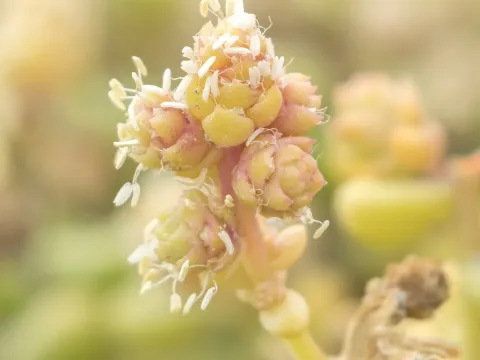
Halophytum
Halophytum
Halophytum (Halophytum ameghinoi) is the sole genus within the Halophytaceae family, known for its remarkable adaptation to hyper-saline environments. Native to the arid steppes of Patagonia, this plant has evolved to thrive in soils where typical crops would fail due to high salinity.
What the section contains

Halophytum
The botanical structure of Halophytum is that of a fleshy annual succulent. Its cells are highly specialized for ion compartmentalization, allowing the plant to manage osmotic stress efficiently while accumulating high concentrations of salts in its vacuoles.
For successful cultivation, Halophytum requires alkaline, high-salinity soils. Unlike conventional crops, it does not require fertile land, making it a sustainable candidate for rehabilitating degraded or abandoned saline agricultural areas.
Climatic requirements are centered around intense solar radiation and arid conditions. The plant is drought-resistant, but its vegetative growth phase is highly responsive to minimal irrigation with brackish water, which boosts overall biomass production.
Agrotechnical practices emphasize soil preservation and minimal tillage. Since the plant is naturally adapted to harsh environments, the goal of management is to maintain the chemical balance of the soil while providing adequate spacing for plant development.
The primary threats to Halophytum include soil-borne fungal pathogens, typically resulting from waterlogging. While the plant is adapted to saline environments, poor drainage leading to hypoxic soil conditions can trigger root rot.
Pests that feed on succulent tissues, such as specialized aphids or coleoptera, represent a risk during the early stages of growth. These pests can exploit the high water content of the tissues if the plants are stressed by extreme heat or drought.
Erosion is a significant threat in areas where the soil cover is sparse. Wind damage to the shallow root system of young plants can lead to significant crop loss, necessitating windbreaks or careful density management during sowing.
Weed competition is generally low due to the high salinity of the environment. However, invasive salt-tolerant weeds can emerge if the soil is disturbed or if irrigation practices create localized non-saline patches.
Effective management includes consistent monitoring of drainage levels and avoiding the use of excessive fresh water. The plant's internal saline chemistry acts as a natural deterrent against most generalized plant diseases, ensuring high overall health in suitable environments.