
Dicranopteris flexuosa
Dicranopteris flexuosa
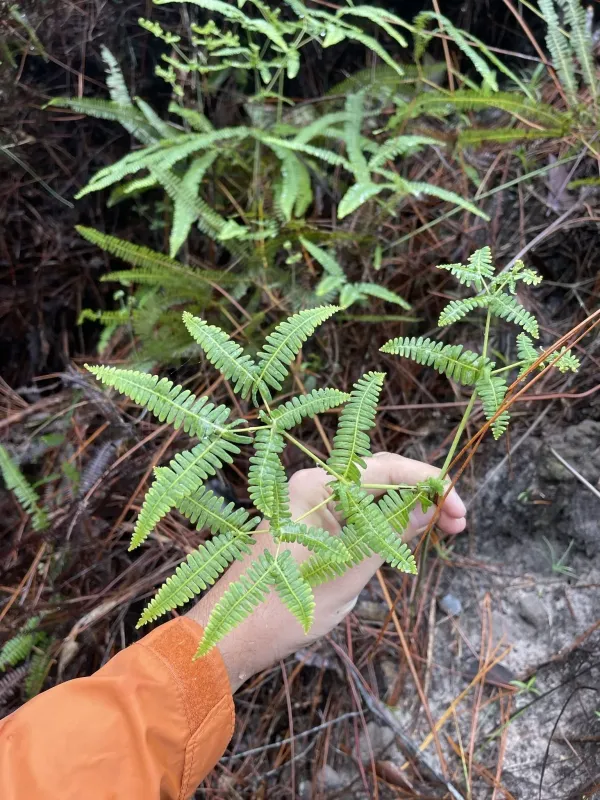
Description
Growing requirements
Dicranopteris flexuosa is a perennial fern species belonging to the Gleicheniaceae family. It is native to the tropical and subtropical regions of the Americas, thriving in diverse humid environments.
The plant grows best in acidic, well-drained soils that are typically poor in nutrients. It is often considered a pioneer species, colonizing degraded lands and steep hillsides in its native range.
Climate requirements include a high-humidity environment and consistent warmth. It does not tolerate cold temperatures or frosts, making it unsuitable for cultivation in temperate zones without climate control.
Botanically, this fern is characterized by its distinct dichotomous branching pattern. The fronds can extend indefinitely, allowing the plant to form dense, interconnected thickets across the landscape.
In agricultural and environmental management, it is primarily valued for soil stabilization. Its aggressive creeping rhizomes make it an excellent choice for preventing erosion in tropical agricultural zones.
Main diseases and pests
Dicranopteris flexuosa shows remarkable natural resistance to common insect pests, largely due to the chemical composition of its fronds, which acts as a deterrent.
The most significant threats to its health are fungal pathogens, which typically proliferate in stagnant water or areas with poor air circulation, leading to root and leaf rot.
Over-fertilization represents a major threat to the plant's health, as it is adapted to nutrient-poor soils and can suffer from nutrient toxicity if exposed to excessive mineral inputs.
Competition from fast-growing invasive weeds can significantly hinder the establishment of the fern, as it requires adequate light to maintain its growth density.
Mechanical trauma to the rhizomes during maintenance can lead to systemic infections, causing dieback in mature colonies if the site is not properly managed.