
Whitfordiodendron erianthum
Whitfordiodendron erianthum
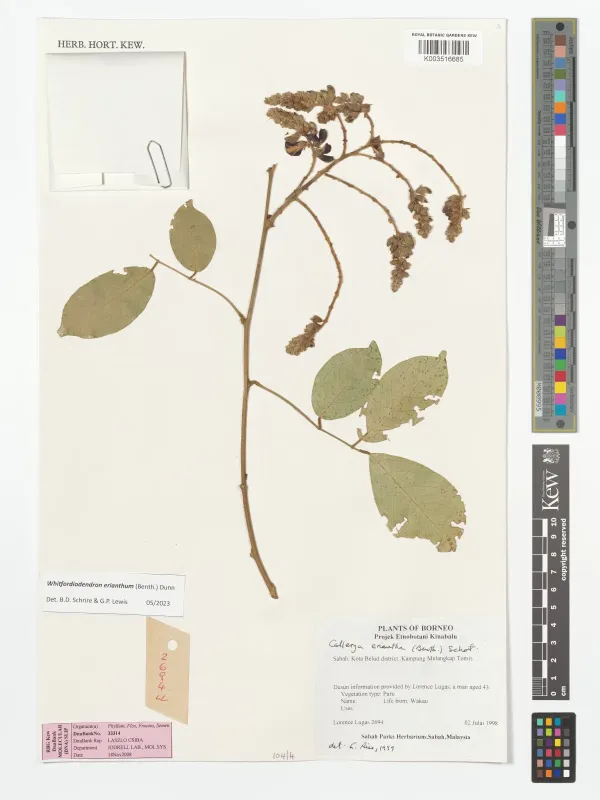
Description
Growing requirements
Whitfordiodendron erianthum is a woody vine belonging to the Fabaceae family. Native to the tropical regions of Southeast Asia, this species is well-adapted to the high-humidity and high-temperature environments characteristic of rainforests.
Climatic requirements for successful cultivation include consistent tropical conditions with no exposure to frost or prolonged cool spells. The ideal temperature range for this plant is typically between 20°C and 30°C throughout the year.
Soil structure is critical for this species; it requires a well-draining, nutrient-rich substrate. Waterlogging is detrimental and can lead to rapid root decay, therefore, soil composition should provide excellent aeration and moisture regulation.
Agricultural techniques must account for the plant's vining nature. Providing a sturdy vertical support system, such as trellises or netting, is necessary to facilitate proper vegetative development and to prevent the stems from matting on the ground.
Light management involves providing bright, indirect light. Direct exposure to intense midday sunlight can scorch the leaves, so shading during peak hours is recommended, particularly in greenhouse or nursery settings.
Main diseases and pests
The main pests affecting Whitfordiodendron erianthum include spider mites and mealybugs, which thrive in conditions of high temperature and low ventilation. Early detection is essential to prevent large-scale infestations.
Fungal pathogens such as leaf spot and root rot are significant threats in humid environments. These are often triggered by excessive soil moisture and poor airflow, necessitating strict control over irrigation frequency.
Viral infections may occur, manifesting in leaf mottling or stunted growth. Since there are no direct cures for viral diseases in plants, the removal and destruction of infected individuals are necessary to prevent the spread to healthy stock.
Physical damage during maintenance can also serve as an entry point for opportunistic pathogens. Sanitizing tools and maintaining a clean environment are standard practices for managing this crop's health.
Ongoing monitoring of plant vigor and leaf color helps in early identification of stress factors, allowing for prompt interventions with either cultural or chemical control measures tailored to the specific ailment.