
Winged bean
Psophocarpus tetragonolobus (L.) DC.
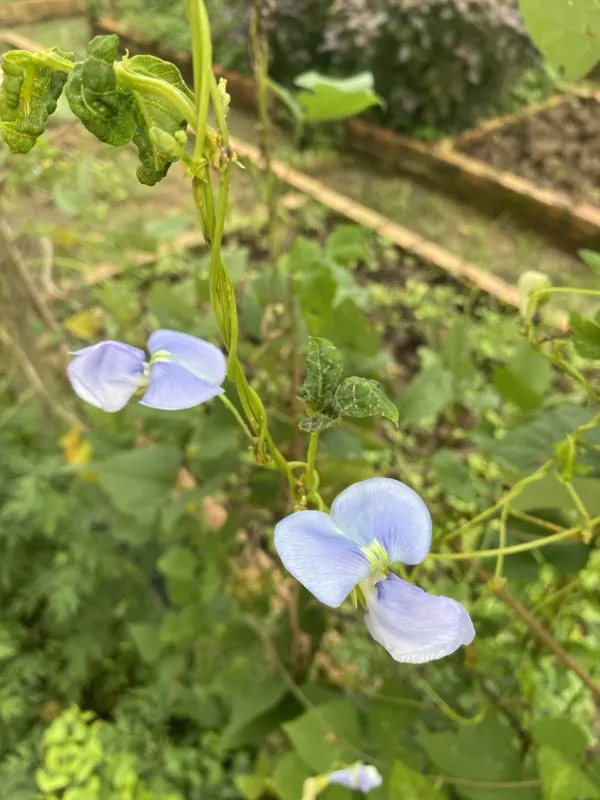
Description
Sowing dates
Sowing should only occur once soil temperatures are consistently high, typically above 25°C. Seeds require warmth to germinate successfully, and planting in cold, damp soil will likely result in poor establishment or fungal issues affecting the seeds.
Pre-soaking seeds for 12 to 24 hours prior to planting is a common practice that significantly improves germination rates. Seeds are typically planted at a depth of 2 to 3 cm, spaced according to the intended harvest goal—either for foliage, pods, or tubers.
Since the plants are naturally vining, providing structural support such as trellises or sturdy poles is vital. Proper spacing between rows, typically around 1 meter, ensures enough room for the vines to climb, promotes good airflow, and facilitates easy access during harvest.
In large-scale cultivation, precision sowing methods are used to ensure uniform stand density. Monitoring initial emergence is crucial, as the young seedlings are highly vulnerable to weed competition during the first few weeks of their life cycle.
The timing of sowing should be aligned with the local climate's wet and dry seasons to ensure the plant receives adequate moisture during its peak flowering phase while avoiding rot during the seedling stage.
Growing requirements
The winged bean thrives in tropical and subtropical climates, requiring temperatures between 20°C and 35°C for optimal growth. It is highly sensitive to frost, which can kill the plant instantly, making it unsuitable for regions with cold temperate climates in open fields.
Regarding soil preferences, the plant is adaptable but performs best in well-drained, fertile loams with a pH ranging from 5.5 to 7.0. Preventing waterlogging is essential, as the roots are susceptible to decay in saturated, heavy clay soils.
Full sun is necessary for the plant to reach its full yield potential. Excessive shade not only restricts the vine's development but also dramatically reduces the formation of flower buds and the subsequent pod set.
Water requirements are moderate, but consistent moisture is key during the flowering and pod-filling stages. While the crop exhibits some drought tolerance once established, prolonged dry spells will lead to stunted pods and lower overall quality.
Fertilizer application should be balanced, with a focus on phosphorus and potassium to encourage root and fruit development. Nitrogen fertilizer is often unnecessary due to the plant's nitrogen-fixing capabilities, and excessive nitrogen can lead to overly vegetative growth at the expense of yield.
Yield
Under favorable tropical conditions, winged bean yields for young pods can range between 10 and 15 tons per hectare. This is achievable through repeated harvesting, as the plant remains productive for several months when managed correctly.
Seed yields are generally lower, averaging around 1.5 to 2.5 tons per hectare. Success in seed production relies heavily on the presence of effective insect pollinators to ensure successful fertilization of the flowers.
Tuber production varies significantly by cultivar, with some varieties yielding up to 5 tons per hectare of edible roots. Because harvesting the tubers usually marks the end of the plant's life, farmers must strategically choose whether to prioritize pods or roots.
The yield potential is strongly influenced by the length of the day, as many cultivars are photo-sensitive. Selecting varieties that are well-adapted to the local latitude is essential for maximizing the crop's output and ensuring timely maturation.
Frequent and timely harvest of pods is one of the most effective strategies for maintaining high yields. Allowing pods to over-mature on the vine signals the plant to reduce further flowering, effectively shortening the productive window.
Main diseases and pests
Powdery mildew is a common threat, especially in humid conditions with poor airflow. Regular scouting and the application of appropriate fungicides or biological controls are necessary to prevent the disease from spreading throughout the planting.
Insect pests such as aphids, thrips, and various leaf-eating caterpillars can cause significant damage to the foliage and buds. Integrated pest management, including the use of neem oil or targeted biological agents, helps keep populations below economic injury levels.
Root-knot nematodes can be problematic in soils where the crop has been grown repeatedly. Crop rotation is the most effective defense, and maintaining a break of at least three years between winged bean crops on the same site is highly recommended.
Viral infections, often transmitted by whiteflies or aphids, lead to mosaic patterns and stunted growth. Disease control centers on eliminating the vector insects and sourcing high-quality, virus-free seeds from reputable suppliers.
Root rot, caused by various fungal pathogens, is a direct result of poor drainage or overwatering. Maintaining a well-drained field and avoiding standing water around the base of the plants are critical preventive measures.
Harvesting
Young pods are ready for harvest 60 to 80 days after sowing, while they are still tender and about 10–15 cm long. If left too long on the vine, the pods become fibrous and woody, making them unsuitable for fresh consumption.
For seed production, pods are left on the vine until they turn brown and dry out naturally. After harvest, they are threshed, and the seeds are thoroughly sun-dried to ensure a low moisture content, preventing spoilage during storage.
Harvesting the tubers occurs at the end of the growth cycle when the leaves begin to yellow and wither. Careful excavation is required, as the tubers can be brittle and easily damaged by digging tools, which affects their marketability.
Post-harvest handling involves cleaning the produce of all soil and debris. Fresh pods should be kept cool and slightly moist to maintain their turgor, as they can lose quality quickly if exposed to dry, hot conditions.
Storage should prioritize low temperatures (around 5°C to 7°C) and high relative humidity for pods. For long-term storage, seeds must be kept in airtight containers in a cool, dark environment to maintain viability and prevent pest infestation.