
Desmanthus bicornutus
Desmanthus bicornutus S. Watson
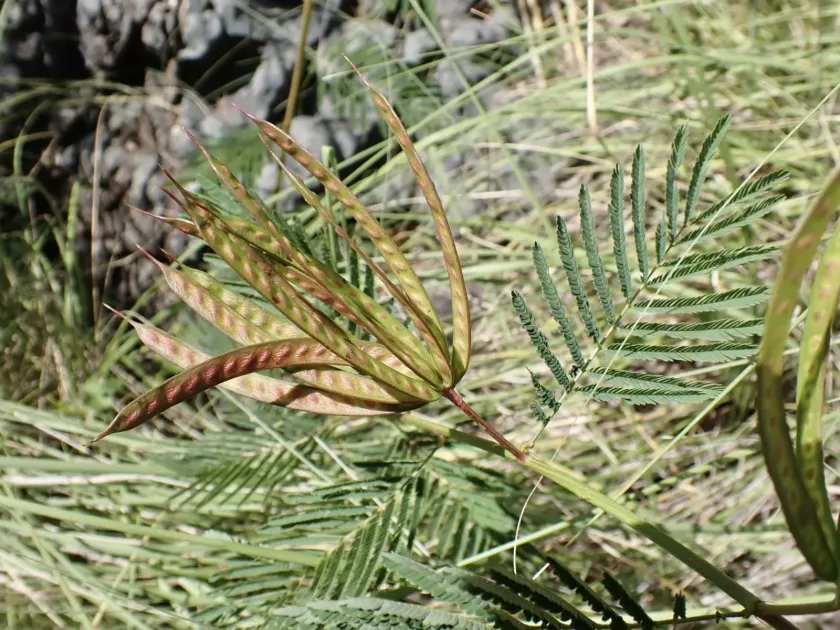
Description
Sowing dates
Desmanthus bicornutus is a hardy perennial legume that requires stable temperatures for germination. Planting should occur in late spring when the soil temperature consistently reaches 18-20 degrees Celsius to ensure robust emergence.
For optimal results, seeds should be sown in moist, well-prepared soil at a shallow depth of 1-2 centimeters. Proper seed-to-soil contact is essential for uniform germination and helps prevent the seeds from drying out in open field conditions.
Row planting is highly recommended as it facilitates easier weed management during the early stages of growth when the plants are most vulnerable to competition. Careful spacing helps to ensure that each seedling receives enough light and nutrients to establish itself.
The seeding rate must be calculated based on the purity and viability of the material. In cooler climates, earlier planting is encouraged to ensure the root system is well-established before the onset of extreme summer heat or drought stress.
Post-sowing care is minimal but critical, specifically during the first few weeks after emergence. Protecting the young seedlings from invasive weeds allows the plants to develop deep root systems, which are essential for their survival in subsequent seasons.
Growing requirements
This crop is recognized for its exceptional resilience and ability to thrive in harsh, semi-arid environments. It performs exceptionally well in hot climates where water availability may be limited for other forage species, showcasing its strong drought tolerance.
The plant thrives in well-drained soil profiles, particularly in clay or loamy soils. It demonstrates a high tolerance for carbonate-rich substrates, although it is strictly intolerant of waterlogging or areas prone to frequent flooding.
As a legume, Desmanthus bicornutus forms a symbiotic relationship with nitrogen-fixing bacteria in the soil. This biological nitrogen fixation is a significant agricultural advantage, as it enhances soil health and reduces the necessity for nitrogenous fertilization.
Sunlight exposure is crucial for this species, as it is highly photophilic. It should be grown in open areas without significant canopy cover, as shading can drastically suppress its growth and overall biomass production over the growing season.
Soil pH levels should ideally be neutral or slightly alkaline. While the plant can tolerate various conditions, it performs significantly better in non-acidic environments where the nodulation process with symbiotic bacteria remains fully active.
Yield
Desmanthus bicornutus is primarily cultivated for its high-quality forage value, making it an excellent choice for pasture systems and hay production. It is highly palatable, which leads to good livestock weight gain and nutritional intake.
The nutritional profile includes a high protein content, which is essential for the healthy development of cattle and small ruminants. Proper grazing management is required to prevent overgrazing, which can deplete the plant’s reserves and reduce its longevity.
In terms of production cycles, the crop offers high biomass returns if managed correctly. Under irrigation, it is possible to achieve several cuts per year, provided the timing coincides with the plant’s active growth phases and recovery periods.
For hay production, timing is everything; harvesting should begin at the start of the flowering phase to optimize the balance between volume and nutrient density. Proper drying techniques are necessary to preserve the delicate leaves that contain most of the protein.
The plant's longevity makes it a sustainable investment for long-term forage systems. With a lifespan often exceeding several years, it serves as a stable component of the farm’s feed supply chain, capable of surviving through dry spells.
Main diseases and pests
Like many leguminous crops, Desmanthus bicornutus may be susceptible to fungal leaf spots if grown in areas with poor airflow or high humidity. Managing plant density and ensuring good field drainage are effective preventive measures for these diseases.
Insect pests such as leaf-eating caterpillars or weevils can cause localized damage, particularly during warm, dry periods. Early detection through regular field scouting allows for targeted interventions, minimizing the need for synthetic pesticide usage.
Root rot is perhaps the most significant threat, usually caused by improper soil drainage. Ensuring that the field chosen for planting is not prone to water accumulation is the primary method of preventing these critical root-related issues.
Competition from weeds is a major concern during the establishment year. If the plant is overshadowed by faster-growing weeds, its development will be stunted, highlighting the importance of pre-planting soil preparation and active weed control.
Maintaining the overall health of the plant through proper nutrient management is essential for building natural resistance. Regular soil tests help identify any deficiencies in phosphorus or potassium that could weaken the plant's immune response to local threats.