
Desmanthus virgatus
Desmanthus virgatus (L.) Willd.
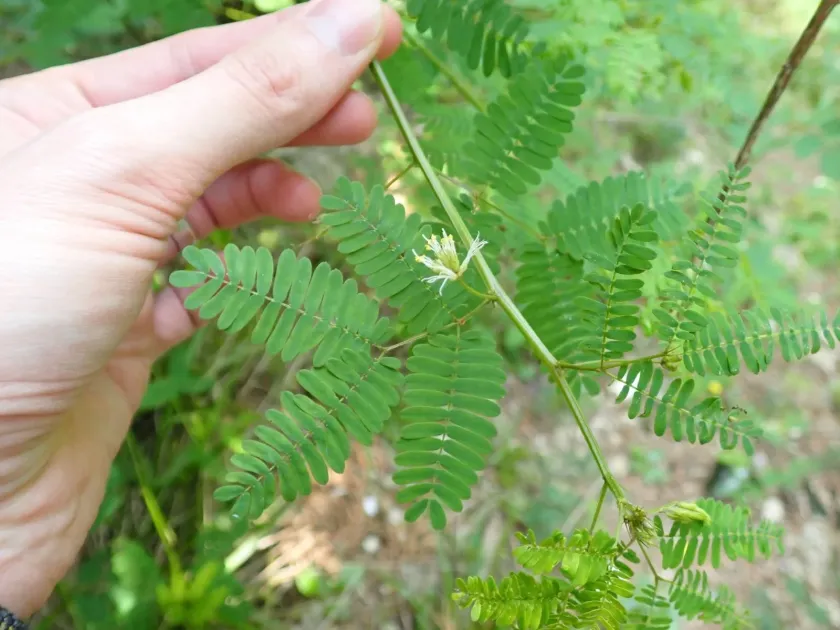
Description
Sowing dates
Desmanthus virgatus is typically sown at the beginning of the rainy season to ensure sufficient soil moisture for seed germination.
Since the seeds have a hard seed coat, mechanical or chemical scarification is recommended to increase the germination rate and ensure uniform field emergence.
The optimal seeding depth is 1 to 2 centimeters, providing enough contact with the soil while preventing desiccation of the embryo.
The crop shows vigorous early growth, which helps in establishing a strong root system and competing effectively against weeds in the early stages.
Sowing density depends on the final application, with higher seeding rates utilized for hay production compared to pasture establishment.
Growing requirements
Desmanthus virgatus, belonging to the Fabaceae family, is a perennial shrub native to the tropical regions of the Americas, known for its adaptability.
This crop thrives in a wide range of soil types, including heavy clays and rocky soils, where many other legume species fail to establish properly.
It is highly recognized for its exceptional drought tolerance, attributed to a deep taproot system that explores lower soil layers for water.
The plant performs best in warm tropical climates with temperatures between 25 and 35 degrees Celsius, as it lacks significant frost tolerance.
As a legume, it performs effective nitrogen fixation through symbiosis with Rhizobium bacteria, significantly enhancing soil fertility for the ecosystem.
Yield
The primary economic value of Desmanthus virgatus lies in its high-quality forage production for ruminant livestock, such as cattle and sheep.
The biomass contains a favorable level of crude protein and digestible nutrients, making it a valuable feed component in tropical areas.
Under a well-managed rotational grazing system, the plant demonstrates excellent regrowth capabilities following intensive harvest or grazing.
Besides forage, it is utilized in agroforestry for creating hedges and stabilizing soil on steep slopes, protecting them from erosive forces.
Yield stability is maintained through proper soil moisture management and avoiding overgrazing, ensuring long-term biomass production.
Main diseases and pests
Desmanthus virgatus is generally robust and exhibits natural resistance to many common fungal and bacterial diseases found in other legumes.
Potential pest threats include seed-eating beetles and occasional foliage-feeding insects, though these rarely reach economic injury thresholds.
Waterlogging in soils with poor drainage can be detrimental, leading to root rot and reduced vigor during prolonged wet spells.
Competition from aggressive native grasses can hinder the development of the stand, requiring management of the surrounding vegetation.
Overall, the plant is remarkably hardy and requires few, if any, chemical inputs to maintain its health and yield capacity.
Harvesting
For high-protein hay production, harvesting should be performed before the onset of flowering to maximize nutrient concentration in the leaves.
Maintaining a stubble height of at least 15 centimeters is crucial to allow the plant to regenerate vegetative branches efficiently.
Seed harvest requires careful timing as the pods tend to dehisce upon drying, necessitating harvesting when the pods are still slightly green.
Pasture usage should follow a rotational grazing schedule to ensure the plants recover fully between grazing events, preventing depletion.
With correct harvesting practices, a stand of Desmanthus virgatus can remain productive for several years, providing reliable feed sources.