
Astragalus-like licorice
Glycyrrhiza astragalina
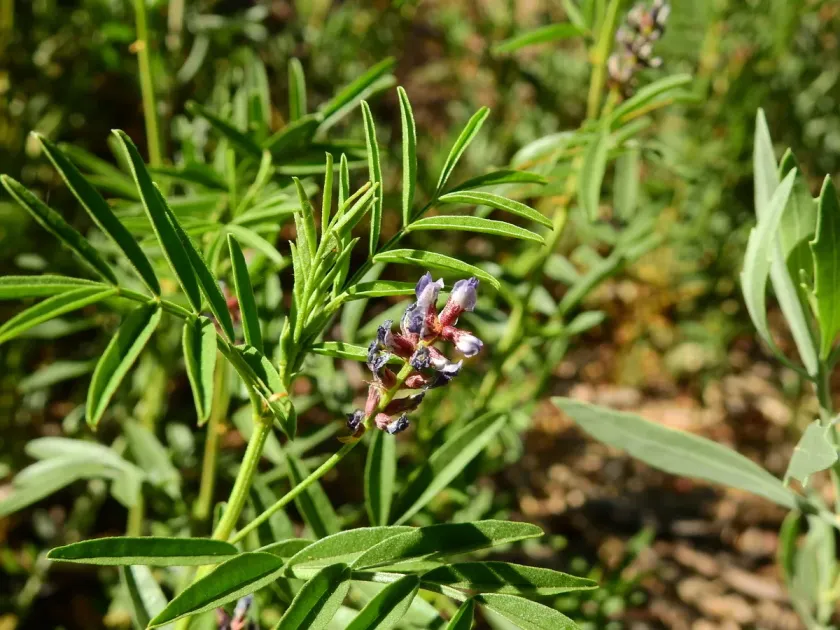
Description
Sowing dates
The sowing of Glycyrrhiza astragalina, a member of the Fabaceae family, should be performed in the spring when soil temperatures reach 10–12°C. April is generally considered the optimal time, allowing seeds to take advantage of soil moisture from melting snow.
Due to the hard seed coat, scarification or pre-soaking in growth stimulants is necessary to ensure uniform germination. Seeds are typically planted at a depth of 2–3 centimeters, depending on the soil structure.
Ensuring adequate planting density is vital as the crop develops a deep and robust root system. Row planting with a spacing of up to 60 cm is the standard method for industrial cultivation, allowing for efficient mechanical maintenance.
While the plant is hardy, spring frost can impact early growth, so monitoring weather conditions is advisable. Irrigation immediately after sowing is recommended to encourage rapid and simultaneous emergence.
For large-scale operations, late-autumn sowing can be considered, which allows for natural seed stratification, leading to earlier and more vigorous growth in the following season.
Growing requirements
Glycyrrhiza astragalina is a light-loving and drought-tolerant plant well-adapted to arid and semi-arid climates. It thrives best in open, sunny locations where it can avoid competition for light.
The ideal soil conditions are deep, loose, and fertile sandy or light loamy soils with excellent drainage. The crop is highly sensitive to waterlogging, which can easily trigger root rot and compromise plant health.
A neutral soil pH range of 6.5–7.5 is optimal for development. Interestingly, the plant shows significant tolerance to saline soils, making it a sustainable candidate for rehabilitating degraded or salted land.
The plant grows most actively at temperatures between +20°C and +28°C. During the winter, it enters dormancy and can withstand significant sub-zero temperatures without requiring specialized cover.
Balanced application of phosphorus and potassium fertilizers during the growing season supports better root system expansion and improves the quality of the harvested raw materials.
Yield
The yield of Glycyrrhiza astragalina is primarily evaluated by the mass and quality of its rhizomes. Productivity is heavily dependent on soil quality, age of the plantation, and strict adherence to agrotechnical protocols.
Under professional cultivation, one can expect a yield of 3 to 5 tons of dried raw material per hectare. The accumulation of bioactive compounds in the roots peaks during the third or fourth year of growth.
The growth rate in the first two years is relatively slow, as the plant focuses energy on establishing its primary taproot. Consequently, plantations are usually managed on a long-term harvest cycle.
Effective weed control during the first year of vegetation is critical to achieving high yields. Excessive weed pressure can reduce potential biomass production by up to 30–40%.
Modern agrotechnical practices, such as drip irrigation and the use of precise micronutrient applications, allow farmers to significantly increase the marketability and root mass of the crop.
Main diseases and pests
Wireworms and weevil larvae are the most significant threats to young seedlings, as they feed on roots and stems. Pre-planting soil insecticide treatments are standard protective measures.
Powdery mildew is a common fungal threat, often occurring under high humidity or in overly dense plantings. Maintaining correct row spacing and ensuring proper air circulation is the best preventative strategy.
Rust diseases can affect leaves in mid-summer, leading to premature foliage death and reducing the plant's ability to store nutrients in the roots. Timely fungicide application is necessary upon detection.
Root rot is a major risk on poorly drained plots or during periods of excessive rainfall. Proper field selection and soil management are essential to prevent this issue.
Integrating biological pest control methods is increasingly preferred in the pharmaceutical production sector to ensure the final product meets high ecological safety standards.
Harvesting
Harvesting of the rhizomes is primarily conducted in the late autumn as the above-ground biomass begins to yellow and wither. This timing ensures the highest concentration of active compounds in the roots.
Harvesting requires heavy machinery capable of penetrating the soil to a depth of 50–70 cm. Minimizing physical damage to the roots is essential to maintain market value and ensure proper storage life.
Immediately after lifting, the roots must be cleaned of soil and debris, with small lateral branches removed. Efficient primary processing is key to preventing mold or rot before drying begins.
The drying process should be carried out at a temperature of 40–50°C until the roots become brittle. Proper drying ensures the chemical integrity of the active ingredients is maintained.
The final product should be stored in dry, well-ventilated facilities, kept away from moisture and direct sunlight to ensure long-term shelf life.