
Elephant apple
Dillenia indica L.
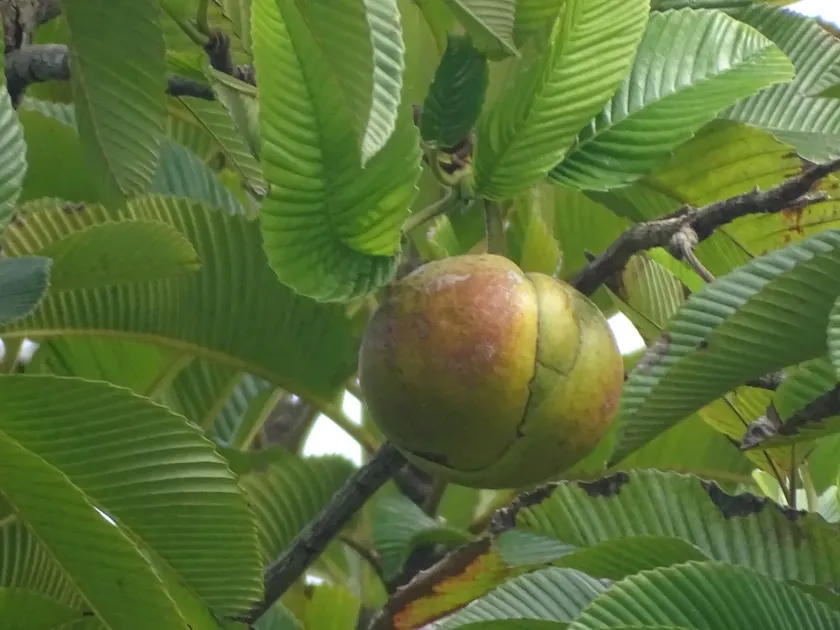
Description
Growing requirements
Dillenia indica, commonly known as Elephant apple, is a tropical evergreen tree belonging to the family Dilleniaceae, native to South and Southeast Asia.
The tree thrives in humid, tropical climates, requiring abundant rainfall and high temperatures throughout the year to maintain its vigorous growth.
It prefers deep, well-drained, nutrient-rich soils and is typically found growing along riverbanks or in low-lying tropical forests.
Due to its tropical origin, the species is extremely frost-sensitive and cannot survive in temperate climates where temperatures drop below freezing.
Optimal site selection for cultivation involves areas with high humidity and protection from extreme wind, which can cause damage to the large, evergreen foliage.
Yield
The primary agricultural output of the tree is its large, globose fruit, which consists of several carpels enclosed by thickened, fleshy, and edible sepals.
These sepals are widely used in culinary applications, serving as a base for curries, jellies, and jams due to their distinct acidic flavor profile.
Beyond food use, the timber from Dillenia indica is valued for its durability and resistance to decay, often utilized in heavy construction and tool manufacturing.
The fruit's high pectin content makes it a valuable commodity for the food processing industry, particularly in the production of natural gelling agents.
Trees are long-lived and, once established, can provide significant annual yields for many decades, supporting local economies in tropical regions.
Main diseases and pests
Root rot and various fungal pathogens pose a significant threat to Dillenia plantations, especially in poorly drained soil conditions or during periods of excessive rainfall.
Insect pests, such as fruit flies and various leaf-eating beetles, can cause damage to both the harvest and the tree's canopy, necessitating integrated pest management.
Young seedlings are particularly vulnerable to stem borers, which can weaken the tree structure early in its life cycle if left unchecked.
Sanitation practices, such as removing fallen fruit and pruning infected branches, are essential to prevent the spread of diseases within the orchard.
The use of chemical pesticides should be minimized to protect local biodiversity, relying instead on sustainable agricultural techniques where possible.
Harvesting
Harvesting usually involves manual collection of the fruit once the sepals attain the desired level of softness and the characteristic aroma develops.
Care must be taken during the harvesting process as the heavy fruits can sustain impact damage when falling from the branches.
The fruits should be transported promptly to processing facilities to prevent rapid deterioration caused by high ambient temperatures and humidity.
Sorting protocols are implemented to separate damaged fruit from high-quality produce, ensuring optimal processing yields for industrial use.
Farmers often implement staggered harvesting cycles, as individual trees may not ripen all their fruits simultaneously within the same season.