
Lepironia articulata
Lepironia articulata (Retz.) Domin
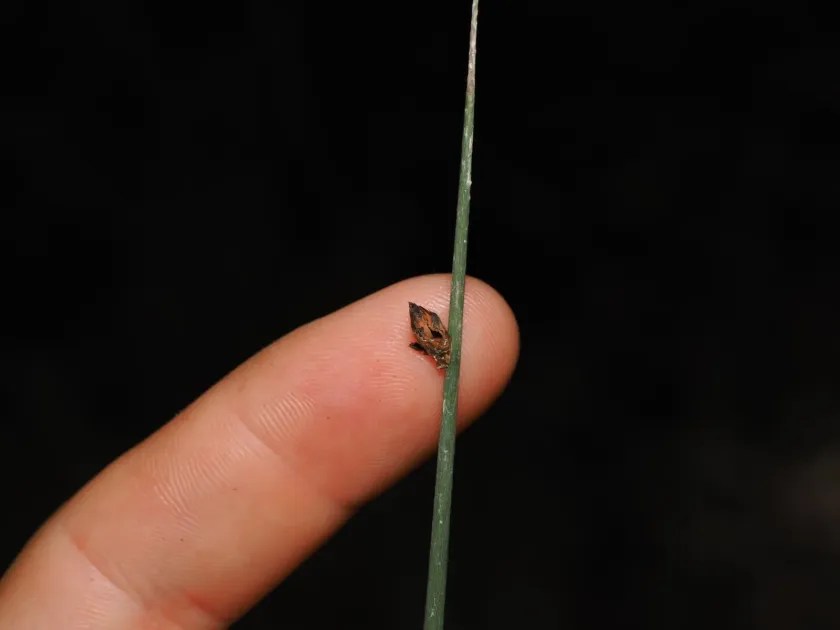
Description
Growing requirements
Lepironia articulata, commonly known as grey sedge, is a perennial aquatic plant belonging to the Cyperaceae family. It is widely distributed across tropical regions of Southeast Asia, thriving in marshes, wetlands, and along the banks of stagnant water bodies.
The plant is distinguished by its cylindrical, hollow, and septate stems that can reach heights of up to two meters. These unique structures are filled with cross-sectional membranes, providing the plant with both buoyancy and structural integrity.
Cultivation requires saturated, acidic soil conditions and high average temperatures. As a hydrophyte, the species is perfectly adapted to permanent waterlogging, making it an ideal candidate for lands that are unsuitable for standard grain production.
Agronomic management focuses primarily on water level regulation and preventing the invasion of undesirable woody species. Due to its rapid rhizomatous spread, once established, the crop forms dense stands that require minimal intervention.
Botanically, it serves as an excellent stabilizer for aquatic ecosystems, preventing soil erosion along embankments and improving the water quality through the absorption of nitrogen and phosphorus.
Main diseases and pests
The crop is generally resilient but may suffer from stem rot if stagnant water conditions become too anaerobic or contaminated. Proper water circulation is the best preventive measure against pathogen buildup.
Pest attacks, particularly from leaf-eating insects, can occur during the initial stages of growth. Farmers manage these threats through integrated pest management and by maintaining water quality to support local predator populations.
Harvesting
The primary economic value of Lepironia lies in its fibers, which are extensively used in the handicraft industry. Harvested stems serve as a raw material for weaving mats, bags, hats, and various household items.
Harvesting is typically done by hand, cutting the mature stems at the base. The harvested material undergoes a rigorous drying process, which is essential to preserve the structural quality of the fiber and prevent fungal decay.
Once dried, the stems exhibit remarkable tensile strength and flexibility. Artisans appreciate this material for its ability to withstand folding and wear, making it superior to many synthetic alternatives for traditional weaving.
Besides handicrafts, the plant has minor roles in fodder production and as a bio-fertilizer when composted properly. It contributes to sustainable livelihood models in rural areas by providing a source of income with minimal input costs.
Future potential includes the development of bio-composite materials, leveraging the durable cellulose structure of the stems for sustainable packaging and biodegradable industrial products.