
Caustis blakei
Caustis blakei Kük. ex S. T. Blake
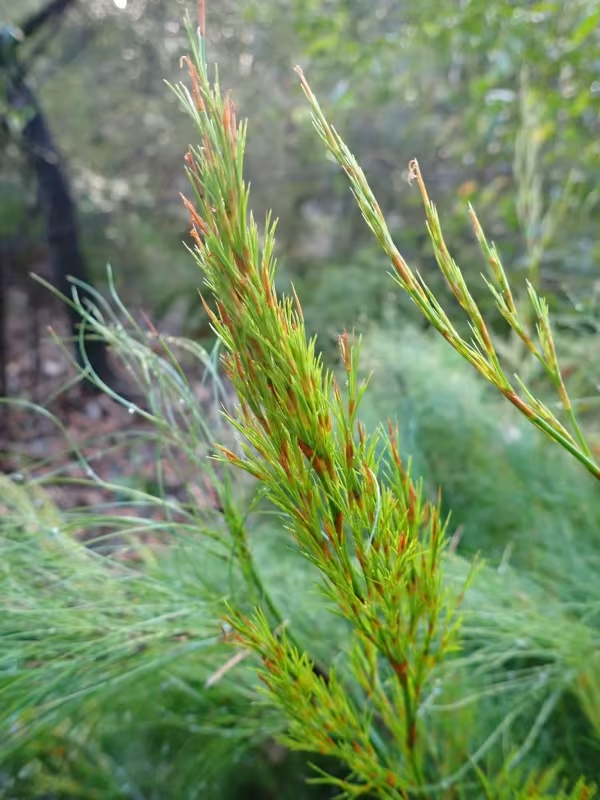
Description
Growing requirements
Caustis blakei is a perennial grass-like plant belonging to the Cyperaceae family. Native to Australia, specifically found in Queensland and New South Wales, it is known for its architectural form.
The plant features distinctively stiff, wire-like culms that form dense, upright clumps. This specialized structure allows the plant to thrive in challenging environments with minimal nutritional support.
Regarding soil requirements, it demands well-drained, sandy, or rocky substrates. It does not tolerate waterlogged conditions, which can quickly damage its sensitive root system.
Sunlight is critical for the development of Caustis blakei. It is an obligate sun-loving species that requires full exposure to reach its maximum structural potential and coloration.
Climate adaptation is primarily subtropical. While it can withstand periods of dry conditions, consistent moderate care during the initial establishment phase is necessary to ensure deep rooting.
Main diseases and pests
Root rot, primarily caused by Phytophthora or Pythium species, remains the most significant threat to the plant's survival in cultivation due to poor soil aeration.
To mitigate these risks, farmers and growers must prioritize the use of high-quality, well-draining potting mixes or ensure elevated planting sites in open fields.
Pests such as spider mites are known to infest the culms if the environment becomes too dry, particularly in indoor or greenhouse settings.
Physical damage to the stems can provide entry points for secondary pathogens, making careful handling during maintenance and trimming essential.
Regular sanitation programs, which involve removing dead foliage and maintaining proper spacing, are crucial for airflow and disease prevention in agricultural settings.