
Chayote
Sechium edule (Jacq.) Sw.
Description
Sowing dates
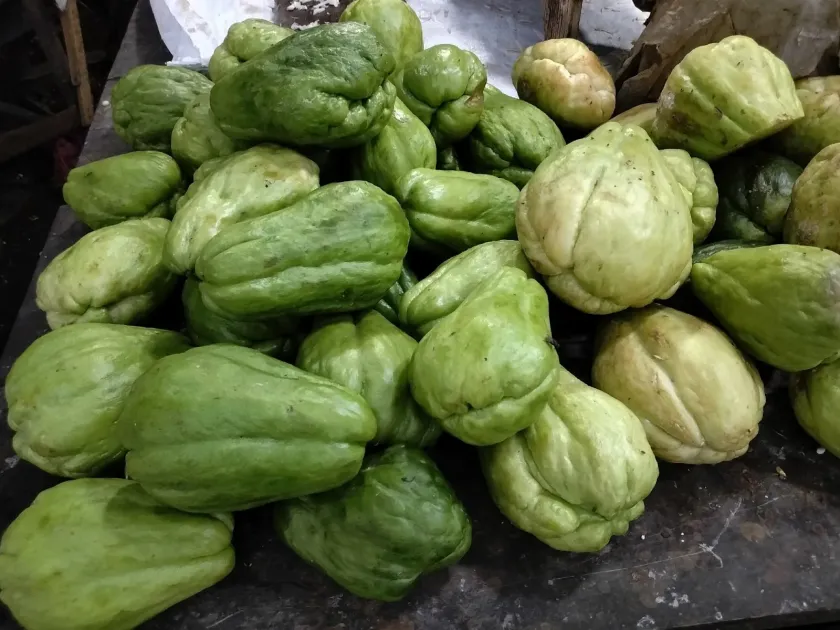
Chayote, botanically known as Sechium edule and belonging to the Cucurbitaceae family, is a unique crop where the single large seed often germinates inside the fruit itself.
Because it is a tropical perennial that is highly sensitive to frost, chayote is typically grown as an annual in cooler climates, requiring a long growing season.
Planting is done by placing the entire sprouted fruit directly into the soil once all danger of frost has passed and the ground is sufficiently warm.
Since chayote is a vigorous climber, providing sturdy trellises or fences is essential for the plant to spread out and produce fruit effectively.
Plants should be spaced at least two to three meters apart to allow for proper airflow and to prevent the entanglement of the heavy vines.
Growing requirements
Chayote thrives in warm, humid tropical conditions, requiring consistent temperatures between 20 and 28 degrees Celsius for optimal growth.
The soil must be fertile, rich in organic matter, and well-drained, as waterlogged conditions can lead to root rot and poor development.
Regular irrigation is necessary to keep the soil moist, but avoid overhead watering, which can encourage fungal diseases on the foliage.
Sunlight is crucial; however, in extremely hot climates, partial shade during the hottest part of the day can help protect the leaves from scorching.
Adequate fertilization with balanced nitrogen-phosphorus-potassium mixes helps support the rapid vegetative growth and subsequent fruit set.
Yield
Under ideal growing conditions, a single healthy chayote vine can produce a high yield, often reaching 50 to 100 fruits per season.
Fruits are typically harvested at a weight of 200 to 500 grams, depending on the specific cultivar and environmental conditions.
The fruit set is continuous throughout the growing season, provided the temperatures remain within the favorable range for the plant.
Yield can be further enhanced by regular pruning of excessive side shoots, which redirects the plant's energy toward fruit development.
In addition to the fruits, the plant's starchy tubers are also edible, adding significant nutritional value to the total harvest.
Main diseases and pests
Common pests include spider mites and aphids, which are particularly troublesome during hot, dry spells and can stunt young leaf growth.
Root-knot nematodes are a serious underground threat, especially in soils where crop rotation is not practiced regularly.
Fungal issues like powdery mildew and anthracnose can develop if the plant density is too high or if the foliage remains wet for extended periods.
Managing these threats requires prompt removal of affected plant tissues and the use of eco-friendly biological control methods.
- Maintain proper spacing for ventilation.
- Use drip irrigation to keep leaves dry.
- Apply neem oil or insecticidal soaps if pests appear.
Harvesting
Harvesting usually begins when the fruits reach a marketable size while the skin remains smooth and light green, usually a month after flowering.
The fruits should be cut carefully from the vine using shears, as pulling them can damage the fragile stems and surrounding immature fruit.
Once harvested, chayote can be stored for several weeks in a cool, well-ventilated area without losing its texture or flavor.
Avoid leaving fruits on the vine until they are fully mature and fibrous, as this significantly reduces their quality for culinary use.
After gathering, clean the fruits gently and ensure they are dry before storage to prevent premature decay or mold growth.