
Cephalopentandra ecirrhosa
Cephalopentandra ecirrhosa
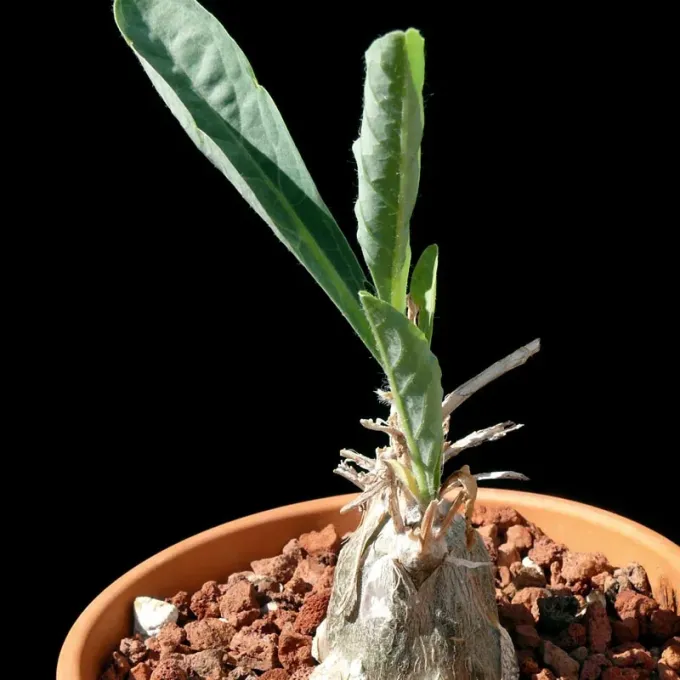
Description
Growing requirements
Cephalopentandra ecirrhosa is a distinctive species within the Cucurbitaceae family, widely recognized for its large, persistent caudex. Unlike many related crops, this plant functions as a succulent, storing significant water reserves to survive long periods of drought.
Native to East Africa, specifically the arid landscapes of Ethiopia, Somalia, and Kenya, this species has adapted to survive in harsh, rocky environments. Its natural habitat is characterized by poor soil quality and highly irregular rainfall, forcing the plant to prioritize moisture conservation.
Cultivation requires a highly porous, gritty substrate that facilitates excellent drainage. Standard potting soils are unsuitable, as they retain too much moisture, which is the primary cause of physiological distress and root system failure for this species.
Environmental requirements include a warm climate with temperatures consistently above 20°C during the growing season. The plant demands bright, filtered light to maintain its structural integrity; intense, direct sun during peak hours can cause irreversible damage to the sensitive bark of the caudex.
Agricultural management should focus on a strictly regulated irrigation schedule. During the dormant winter phase, all watering must cease to prevent rot, while in the growth phase, moisture should be applied sparingly, allowing the substrate to dry out completely between sessions.
Main diseases and pests
The most significant threat to the survival of Cephalopentandra ecirrhosa is fungal rot, specifically targeting the caudex and primary roots. Excess humidity combined with low temperatures creates an ideal environment for pathogenic fungi, leading to tissue necrosis.
Pest pressure is primarily driven by sap-sucking insects like spider mites and mealybugs. These pests thrive in dry conditions and can quickly colonize the foliage and tender new shoots, significantly weakening the plant and inhibiting its photosynthetic capacity.
Root system pests, such as soil-borne nematodes, represent a serious risk if the cultivation medium is contaminated. Infestations can lead to stunted growth, nutrient deficiency symptoms, and ultimately, the decay of the root structure.
Physical damage to the caudex skin can provide an entry point for opportunistic pathogens. Care should be taken during transplantation or maintenance to prevent cuts or bruises, as the succulent tissues heal slowly and are prone to infection.
Environmental stress, particularly sudden changes in light exposure, can lead to plant weakening, making it more susceptible to secondary infections. Maintaining stable conditions throughout the growing season is the best strategy for ensuring long-term plant health.