
Hog gum
Symphonia globulifera L. f.
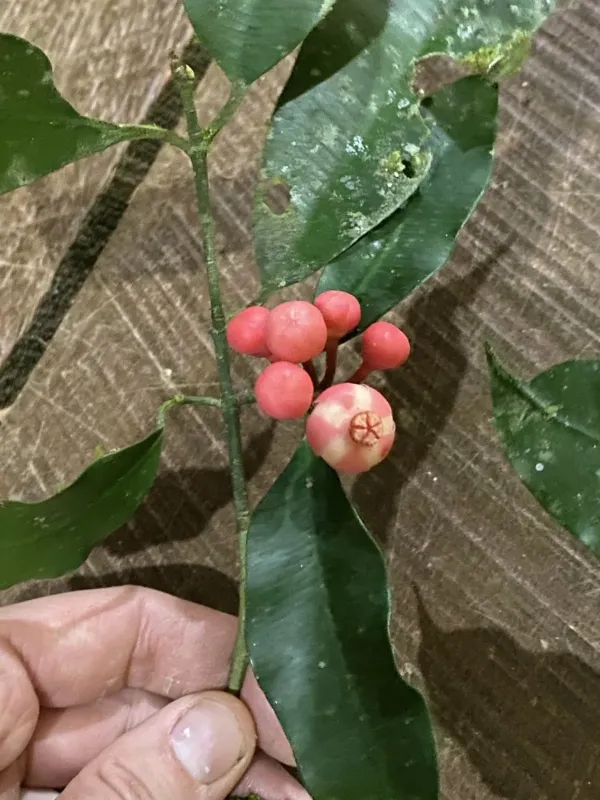
Description
Growing requirements
Hog gum (Symphonia globulifera) is a significant tropical tree species within the Clusiaceae family. It is widely distributed across the tropical regions of Africa, the Caribbean, and Central and South America, typically thriving in swampy forests and near riverbanks.
The species requires high levels of soil moisture and prefers tropical climates with abundant rainfall and warm temperatures throughout the year. It does not possess significant drought tolerance and is restricted to humid habitats.
Botanically, the tree is noted for its stilt roots, which provide stability in waterlogged and unstable substrates. Its bark is smooth, and the tree is characterized by a bright yellow to orange resin that exudes from the trunk when injured.
The timber of this species is valued for its durability and moderate weight, making it useful for local construction and carpentry. The resin, historically used as a sealant for boats and as a torch fuel, remains an important non-timber forest product.
In terms of forestry, Symphonia globulifera plays a vital role in wetland ecosystem health. Its ability to tolerate anaerobic soil conditions makes it a key candidate for reforestation in areas where other species might fail.
Main diseases and pests
The primary threats to the species include fungal pathogens that exploit the constant humidity of its natural habitat. Wood-decay fungi can cause significant damage if the bark is punctured or damaged by external forces.
Stem-boring insects are known to attack weakened trees, leading to a decline in timber quality and overall tree health. While the tree has natural defenses, environmental stress can compromise its resilience.
Deforestation and the drainage of wetlands are significant threats to the wild populations of hog gum. Altering the hydrological landscape leads to the rapid decline of localized stands of this plant.
Preventative measures involve strict management of forest stands to avoid physical damage to the trunk. Maintaining a stable water level is essential to keep the tree's natural defense mechanisms active.
Continuous monitoring is recommended to track the presence of borers and signs of fungal decay. Early detection of symptoms is crucial for maintaining the health of trees in agroforestry plantations.