
Platonia esculenta
Platonia esculenta
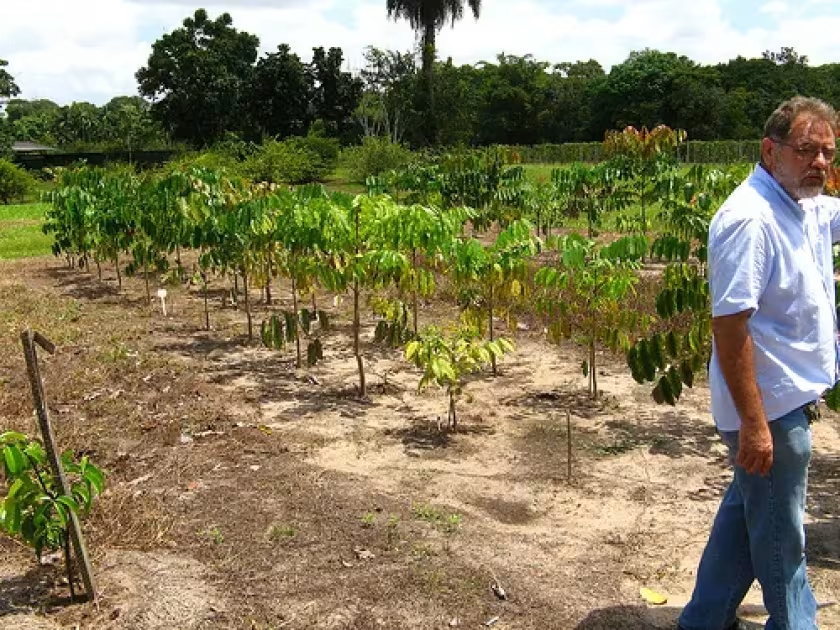
Description
Growing requirements
Platonia esculenta, commonly known as Bakuri, is a tropical fruit tree belonging to the Clusiaceae family. It is native to the rainforests of South America, particularly in Brazil, Paraguay, and Guyana.
Botanically, the tree is characterized by its tall, straight trunk and a dense, evergreen canopy. The leaves are leathery and opposite, providing efficient photosynthesis in the humid conditions of the rainforest floor.
This species requires a warm and humid tropical climate to thrive. It is extremely intolerant of frost and does not survive in regions with significant seasonal temperature drops.
Regarding soil requirements, Platonia esculenta prefers deep, well-draining soils with high organic matter content. It thrives in slightly acidic environments typical of the Amazon region.
Successful cultivation involves maintaining high atmospheric humidity and ensuring constant soil moisture throughout the year. The tree performs best in areas with high annual precipitation.
Yield
The primary economic value of the tree lies in its fruit, which is highly sought after for its sweet-sour pulp. Bakuri fruits are widely used in the food industry to produce jams, ice creams, and jellies.
Bakuri oil, extracted from the seeds, is a premium ingredient in the cosmetic industry. It is known for its excellent emollient properties and is used in lotions, hair care products, and dermatological creams.
The wood of the Platonia tree is also considered of high quality. It is hard, durable, and resistant to decay, making it suitable for construction and high-end furniture manufacturing.
Fruit production usually begins several years after planting. The tree is known for its ability to produce consistent yields under proper management and nutrient-rich conditions.
Post-harvest management involves careful handling to prevent bruising of the thick rind, as the fruit remains popular for both fresh consumption and processing into local specialty food products.
Main diseases and pests
Fungal diseases are the most common issue in Platonia esculenta orchards, particularly those that affect the leaves and fruit when air circulation within the canopy is insufficient.
Pests such as boring insects can compromise the structural integrity of the trunk. Regular monitoring and preventive pruning are necessary to maintain healthy plantations.
Root rot is a critical threat often caused by waterlogging. Ensuring a well-drained substrate is the most effective way to prevent this condition from spreading through an orchard.
Weed control is essential during the early stages of tree growth. Excessive weeds compete for nutrients and water, stunting the development of young saplings.
Maintaining biological diversity around the plantation helps manage pest populations naturally, reducing the need for chemical intervention in the tropical ecosystem.