
Lepyrodiclis holosteoides
Lepyrodiclis holosteoides
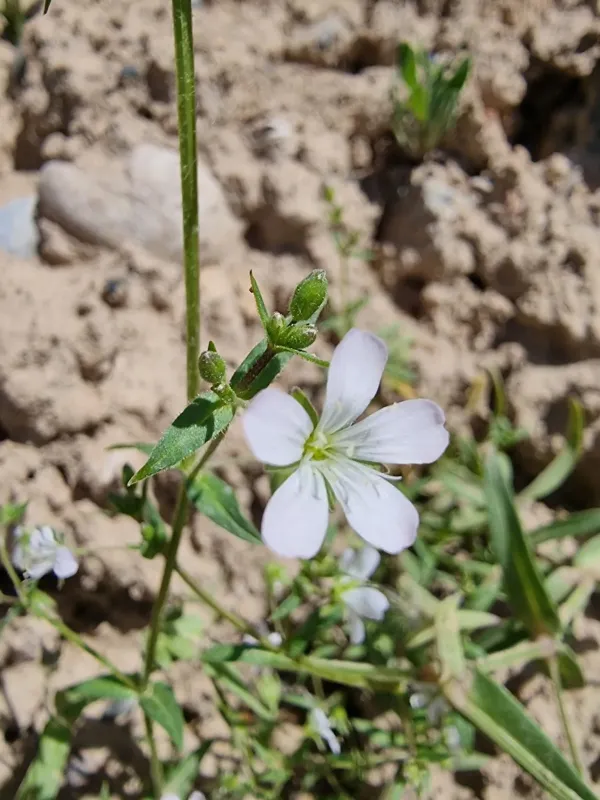
Description
Sowing dates
Lepyrodiclis holosteoides typically acts as a winter annual weed, germinating in the autumn months. It establishes a basal rosette stage that allows it to survive the winter and resume growth in early spring.
Seedlings emerge from shallow depths, usually between 1 to 5 centimeters. Proper seedbed preparation and shallow cultivation are critical steps in reducing the initial weed population.
The plant exhibits high cold tolerance during its vegetative phase, allowing it to compete with winter wheat and other autumn-sown crops. Development is rapid once temperatures rise in early spring.
Agronomic strategies include delayed planting of primary crops to allow for stale seedbed techniques. This forces the germination of weed seeds, which can then be destroyed before crop emergence.
The biological cycle is timed to maximize nutrient uptake before the crop reaches its peak growth stage. This early competition is the main reason for the yield reduction caused by this species.
Growing requirements
As a member of the Caryophyllaceae family, this species thrives in various ecological conditions, particularly in temperate and semi-arid zones. It is widely distributed across parts of Asia and Europe.
The plant prefers well-drained, fertile soil types. It is particularly successful in loamy and silty soils where moisture is available but not stagnant during the initial development phases.
Lepyrodiclis holosteoides has a high light requirement. It is an opportunistic species that takes advantage of gaps in the crop canopy, growing vigorously where light penetration is high.
The species is adaptable to soil pH ranging from slightly acidic to slightly alkaline. It does not require high levels of phosphorus to establish, which often allows it to colonize nutrient-poor areas.
Standard field management practices like crop rotation and mechanical weeding are effective. Rotating crops with different growth patterns prevents the build-up of the seed bank in the soil.
Main diseases and pests
The primary threat posed by this species is the significant reduction in crop yields due to water and nutrient depletion. It acts as a major competitor in fields with poor canopy closure.
Lepyrodiclis holosteoides can host various plant pathogens, potentially spreading diseases to surrounding crops. Its dense growth habit provides a humid microclimate favorable for fungal proliferation.
Pests such as aphids are frequently observed on this weed, using it as an alternative host before migrating to the main crop. This cycle increases the overall pest pressure on agricultural systems.
Chemical control is effective when using selective herbicides at the early rosette stage. Later growth stages become increasingly tolerant to standard chemical applications due to the plant's waxy cuticle.
Integrated Weed Management (IWM) is recommended to control populations over multiple seasons. This includes managing field margins to prevent the encroachment of wind-dispersed or farm-machinery-spread seeds.