
Jagged Chickweed
Holosteum glutinosum
Description
Growing requirements
Jagged chickweed (Holosteum glutinosum) is an annual herbaceous plant belonging to the Caryophyllaceae family. In agricultural settings, it is primarily recognized as a weed species that frequently infests winter grain fields and fallow lands.
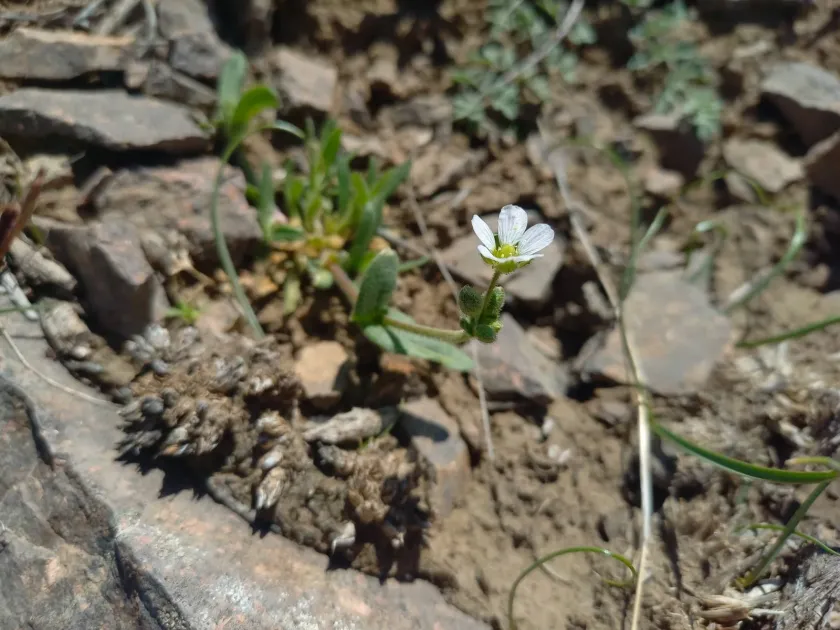
The plant is biologically defined by its glandular hairs, which give the stem and foliage a sticky texture. This feature is a key identification mark and a source of its botanical nomenclature, reflecting its adaptation to local ecological niches.
Its natural range encompasses temperate regions across Eurasia. The plant thrives in disturbed soils, roadsides, and open fields where competition from larger, perennial species is limited during the early spring season.
In terms of growth requirements, Holosteum glutinosum demands ample sunlight and prefers well-drained, light-textured soils. It is a moisture-responsive species that excels in the early spring months, taking advantage of soil moisture before the heat of summer sets in.
Managing this species requires a focus on early-season intervention. Because it acts as a competitor for nutrients and space, effective management relies on a combination of mechanical soil disturbance and competitive planting strategies that shade the soil surface.
Main diseases and pests
As a common weed, Holosteum glutinosum can harbor various plant pathogens that pose a threat to primary crops in the surrounding fields. These interactions are often overlooked in crop scouting programs.
The plant can serve as an alternative host for fungi that cause root rot or leaf spot diseases in cereal crops. Its presence often goes unnoticed until the disease manifests in more susceptible cash crops.
Pest populations, particularly aphids and certain coleoptera, utilize the jagged chickweed for early-season colonization. This creates a bridge for pests to move into crops once environmental conditions improve.
Mechanical tillage is the most traditional approach to control this weed. By inverting the soil before the plant reaches its seeding stage, farmers can significantly reduce the potential for future infestations.
Integrated pest management (IPM) strategies, including herbicide application during the fallow period and proper crop rotation, are essential for limiting the seed bank of this species in fields that are prone to infestation.