
Idiospermum australiense
Idiospermum australiense
Description
Sowing dates
Propagation of Idiospermum australiense occurs exclusively through seeds, which are highly recalcitrant. Viability is lost rapidly once the seeds are removed from the fruit and exposed to air.
Sowing must take place immediately after harvest. The seeds do not possess a dormancy period, and their high moisture content necessitates immediate contact with damp soil for successful germination.
Cultivation requires deep containers because the species develops a significant taproot almost immediately. The primary root pushes deep into the substrate within the first few days of development.
During germination, it is critical to maintain consistent substrate moisture. Even minor desiccation can lead to the death of the embryo and the failure of the seedling to emerge.
Artificial cultivation is primarily limited to botanical research facilities and specialized nurseries dedicated to the conservation of rare and endangered plant species.
Growing requirements
Idiospermum australiense, belonging to the Calycanthaceae family, is an endemic relict species found in the tropical rainforests of Queensland, Australia. It thrives in high-humidity microclimates.
The soil requirements are strict: the plant needs deep, nutrient-rich, and well-drained soil. A high content of organic matter, mimicking the forest floor, is essential for healthy nutrient cycling.
This species is shade-tolerant and requires protection from direct sunlight. In its natural habitat, it occupies the lower layers of the forest, where light is diffused by the dense canopy.
Temperature must remain within a stable tropical range. The plant is extremely sensitive to fluctuations, especially toward cooler temperatures, as it lacks any resistance to frost or cold snaps.
Agronomic management involves maintaining high levels of atmospheric humidity and protecting the plants from strong winds that can strip moisture from the leaves.
Yield
The species has no agricultural yield in the traditional sense. It is not a food crop or a fiber source, and its economic value is restricted to biodiversity conservation and botanical interest.
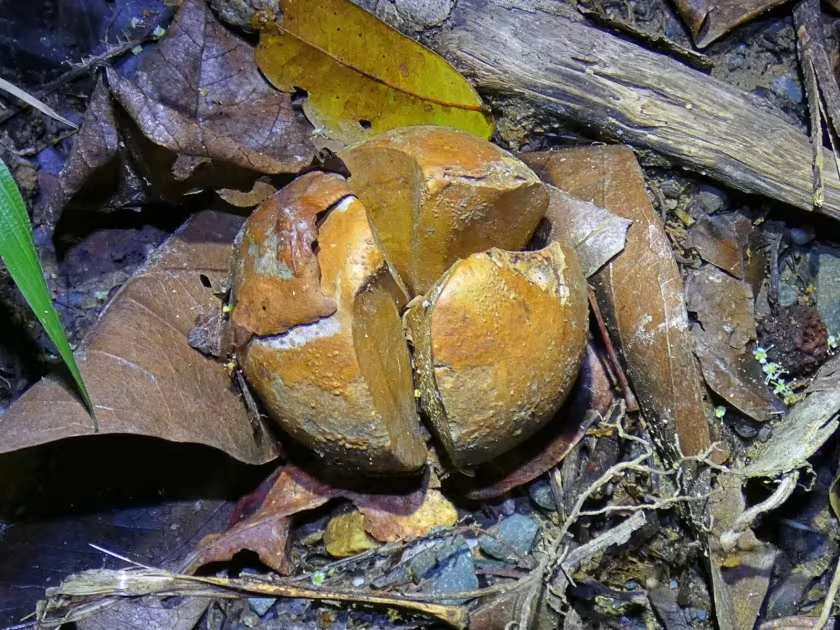
Biological production involves the development of large, woody, indehiscent fruits. A single fruit may contain a seed capable of producing multiple embryos, a rare feature in flowering plants.
Fruit set is irregular and depends heavily on stable environmental conditions within the rainforest remnants. Harvesting for commercial purposes is prohibited and biologically discouraged.
Chemical analyses have identified various alkaloids in the seeds. These compounds are toxic, meaning the plant has no potential for use in animal feed or standard human food production systems.
The success of the species is measured by the survival of its populations in the wild, making traditional yield metrics irrelevant to this unique botanical entity.
Main diseases and pests
The primary threats to Idiospermum australiense are habitat loss, climate change, and the fragmentation of rainforest ecosystems. The species has a very limited geographical range.
Root rot caused by fungal pathogens is a significant threat when soil aeration is poor or waterlogging occurs. The plant is particularly susceptible to these issues in non-native soil types.
Pests, including tropical insects and leaf-miners, can cause damage to foliage. However, in its natural, balanced ecosystem, the plant usually manages to sustain itself through moderate herbivory.
Invasive plant species pose a major threat by competing for space and light, particularly affecting the survival rate of young seedlings in the understory.
- Root rot from overwatering
- Fungal leaf pathogens
- Seed predation by small native rodents
- Habitat fragmentation impacts