
Inflated caulanthus
Caulanthus inflatus
Description
Growing requirements
Inflated caulanthus (Caulanthus inflatus) is an annual herbaceous plant belonging to the Brassicaceae family. It is specifically adapted to the arid and semi-arid desert climates of the southwestern United States, functioning as a distinctive desert ephemeral.
The plant grows naturally in sandy or rocky soils characterized by high permeability and low nutrient content. It occupies open spaces in deserts and foothills, where it thrives in full sun exposure and is highly dependent on seasonal precipitation patterns.
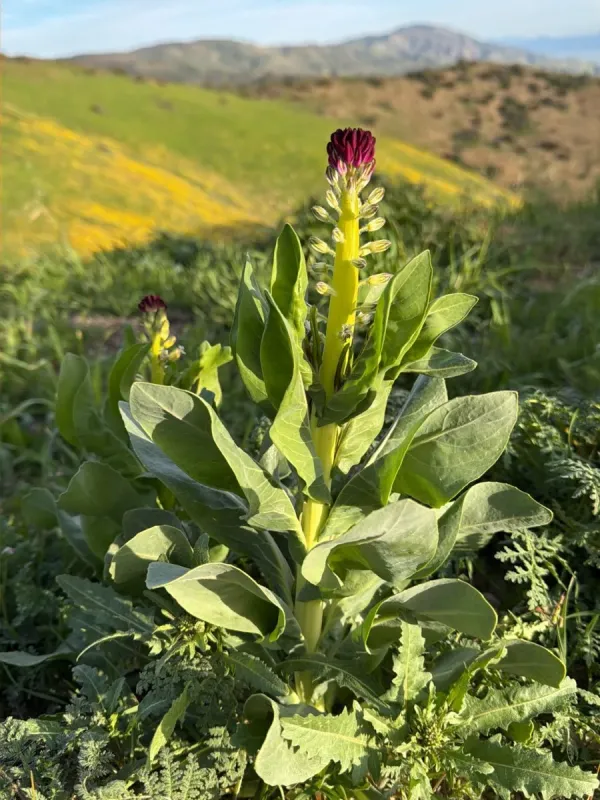
Botanically, Caulanthus inflatus is known for its unique stem morphology, which features distinct inflations or hollow segments. This structural adaptation is believed to assist in water storage and structural integrity during rapid growth phases in the spring.
The climate requirements include high solar intensity and significant diurnal temperature fluctuations. The culture is extremely sensitive to waterlogging and high humidity levels, which can quickly lead to physiological stress or the development of fungal infections in the root system.
Cultivation practices for this species are complex and rarely practiced on a commercial scale. Success in growing this plant relies on mimicking desert conditions, emphasizing well-draining mineral-rich substrates and strictly avoiding excessive irrigation during the active growth cycle.
Main diseases and pests
The primary threats to Caulanthus inflatus include soil-borne pathogens that thrive in moist environments, such as various types of root rot. Ensuring adequate soil aeration and thermal regulation is essential for maintaining the health of the population.
Insect pests, particularly those that target members of the Brassicaceae family, represent a significant threat. Flea beetles and aphids can cause considerable damage to young leaves and stems, requiring integrated pest management strategies if the plant is grown in controlled settings.