
Thick-stemmed caulanthus
Caulanthus crassicaulis
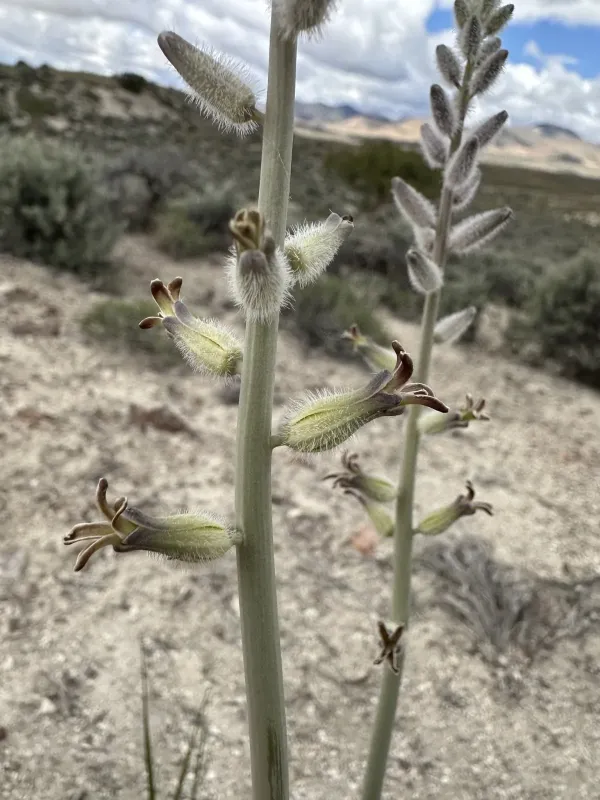
Description
Sowing dates
The thick-stemmed caulanthus is a unique species native to arid environments, requiring specific conditions for successful propagation. Seeds are best sown in autumn, as they typically require a period of cold stratification to break dormancy and trigger spring germination.
In a controlled setting, moisture must be maintained consistently until the seedlings emerge. Natural reproduction in the wild occurs through self-seeding, with the plant dispersing its seeds as the stalks dry out in early summer.
To improve germination rates, seeds can be refrigerated for a short period to simulate winter conditions. They should be sown at a shallow depth of approximately 0.5 to 1 centimeter, ensuring sufficient oxygen reaches the seeds for proper metabolism.
Seedlings usually emerge when ambient temperatures reach the 10-15 degrees Celsius range. Proper spacing is essential, as the plant develops a significant root system and matures into a relatively large, fleshy structure.
When seeding in rows, gardeners should allow for at least 30 to 40 centimeters of space between individual plants. This prevents competition for resources and allows for adequate airflow, which is critical for the health of this desert species.
Growing requirements
Belonging to the Brassicaceae family, the thick-stemmed caulanthus is highly adapted to the harsh conditions of the North American Great Basin. It is commonly found in rocky, open areas across Nevada, Utah, and parts of California.
This plant thrives in well-drained, sandy, or gravelly soils that mirror its natural habitat. It exhibits a remarkable tolerance for alkaline conditions and poor, nutrient-depleted soil, where most conventional crops would struggle.
High solar radiation is a fundamental requirement for this species. It is a strict heliophyte and requires full sun exposure throughout the day; even partial shading can cause the plant to become leggy and structurally weak.
The species is a classic xerophyte, possessing a succulent, fleshy stem that serves as a storage organ for moisture. This biological feature allows it to survive in regions with very low annual precipitation levels.
Excessive water is the primary threat to this plant. Cultivators must ensure excellent soil drainage and avoid any water stagnation near the root crown, as this often leads to rapid decay and fungal infections.
Main diseases and pests
As a member of the mustard family, this species is susceptible to typical cruciferous pests. Flea beetles are the most common threat, particularly in the spring, as they feed on the tender tissues of young emerging leaves.
Fungal issues, such as powdery mildew, can occur if the humidity levels are too high or if the plants are overcrowded. Ensuring proper ventilation between plants is the most effective preventative measure against such outbreaks.
Soil-borne pathogens can be detrimental if the soil structure becomes compacted or overly damp. Regular monitoring of the foliage for signs of chlorosis or wilting is recommended to catch infections at an early stage.
Chemical control measures should be approached with extreme caution, as the plant may be sensitive to certain pesticides. Integrated pest management (IPM) strategies, which prioritize cultural and biological controls, are generally safer.
Maintaining clear space from other commercial cruciferous crops is a key strategy for disease prevention. This helps to prevent the transmission of specialized pathogens that frequently affect plants in the Brassicaceae family.
Harvesting
The thick-stemmed caulanthus has limited commercial utility and is primarily of interest for ethnobotanical studies or ecological restoration. Historically, certain parts of the plant were used as food by indigenous peoples.
Seed harvesting should be performed once the pods have turned brown but before they undergo natural dehiscence. Because the seeds are quite small and light, collection must be done with great care to avoid significant losses.
Commercial harvesting is currently not viable due to the plant's slow growth rate and specific environmental requirements. Instead, efforts are often focused on seed production for conservation purposes and native plant landscaping.
After collection, the seeds should be thoroughly cleaned of debris and stored in a cool, dry environment. They maintain viability for several seasons, provided they are kept away from high humidity and direct heat.
Wild harvesting must be restricted to preserve local biodiversity and prevent the degradation of desert habitats. Future research may explore the potential of this plant's genetic resilience to aid in developing drought-tolerant agricultural strains.