
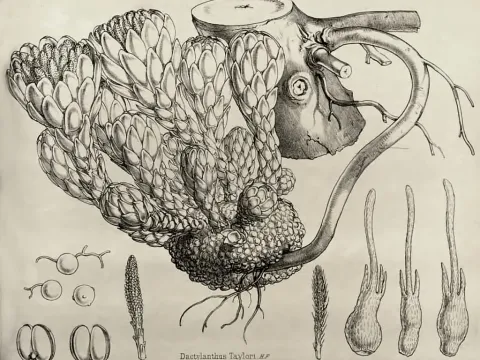
Dactylanthus
Dactylanthus
Dactylanthus taylorii is a unique holoparasitic plant that lacks chlorophyll and relies entirely on a host tree for nutrients. It is native to the native forests of New Zealand, where it attaches to the root systems of various tree and shrub species.
What the section contains

Dactylanthus
The plant grows as an enlarged tuber that forms distinctive galls on the host roots. These galls provide the necessary surface for the plant to emerge through the leaf litter and produce its small, characteristic flowers for pollination.
It thrives in humid, shaded forest environments with high levels of organic soil matter. The presence of well-drained but moist forest floors is critical for the survival of the parasite and its host tree roots.
As a member of the Balanophoraceae family, it has evolved a highly specialized relationship with its host, making it extremely difficult to propagate outside of its natural habitat. It remains a protected species in its native range.
Conservation efforts are primarily focused on protecting old-growth forests and managing populations of invasive pests that disrupt the natural lifecycle of the parasite.
The primary threat to Dactylanthus populations comes from invasive mammals, particularly rats and possums, which consume the flowers and fruit, thereby preventing the plant from reproducing.
Habitat loss due to deforestation and land use changes significantly reduces the availability of suitable host trees required for the lifecycle of this root parasite.
Altered environmental conditions, such as prolonged droughts, negatively impact the forest floor humidity, which is essential for successful seedling germination.
Illegal poaching of the plant's tubers by plant collectors poses a severe risk to small, vulnerable populations that are already struggling to survive in the wild.
Competitive pressure from non-native vegetation may shift the forest ecosystem balance, making it difficult for the specific host tree species to remain healthy and viable.