
Phormium hybrids
Phormium hybrids
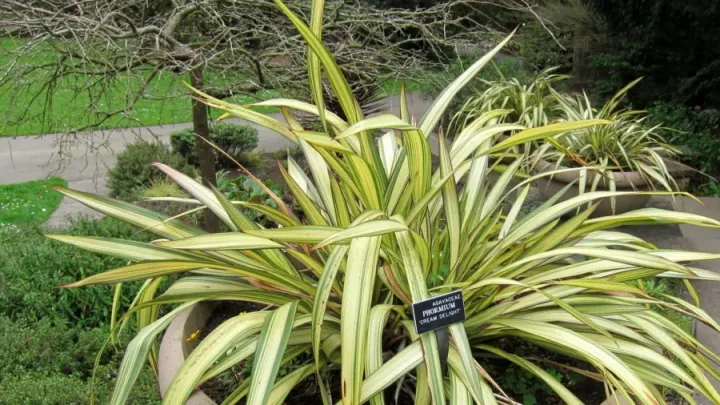
Description
Growing requirements
Phormium hybrids, commonly known as New Zealand flax, are perennial herbaceous plants belonging to the Asphodelaceae family. These plants are renowned for their striking, sword-shaped foliage that provides a dramatic vertical structure in garden landscapes.
Originating from New Zealand and Norfolk Island, Phormiums have adapted to diverse environments ranging from wetlands to alpine slopes. In cultivation, they require a sunny position to ensure optimal leaf coloration and structural integrity of the foliage.
The plant thrives in fertile, well-draining soils with consistent moisture levels. While Phormiums are relatively tolerant of various soil types, they absolutely require efficient drainage to prevent root rot, especially during the dormant winter period.
Cultural care involves regular irrigation during the growing season and periodic fertilization with a balanced mix to encourage robust growth. In colder climates, they should be treated as container plants and moved to protected, frost-free environments during winter.
Historically, the fibers of the leaves have been used for cordage and textiles due to their exceptional strength. Today, they are primarily valued for their high ornamental importance in modern and architectural landscaping designs.
Main diseases and pests
Scale insects are among the most persistent pests for Phormium, often settling along the leaf bases. They draw sap from the plant, which can lead to weakened growth and susceptibility to secondary infections if left untreated.
Mealybugs also pose a significant threat, appearing as white, cotton-like masses in the leaf axils. Regular inspection and the use of systemic insecticides are standard procedures for managing these infestations effectively.
Root rot is the primary disease associated with Phormium, typically caused by poor soil drainage and waterlogging. The leaves begin to yellow at the base and become mushy, necessitating a complete substrate replacement and the removal of affected roots.
Spider mites can become an issue in dry, arid indoor environments or during hot summer spells. High humidity and consistent water supply act as excellent preventative measures against mite proliferation on the foliage.
To ensure healthy development, dead or damaged leaves must be pruned away annually. This practice not only maintains the visual appeal of the plant but also improves airflow, significantly reducing the likelihood of fungal outbreaks.