
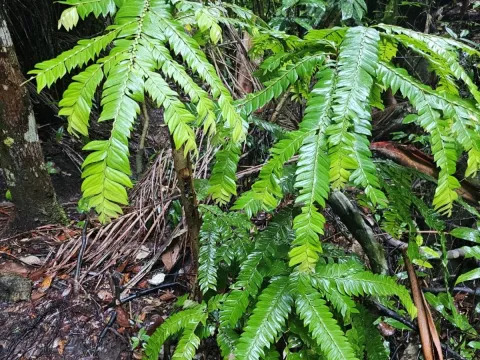
Anisophyllea
Anisophyllea
Anisophyllea is a genus of trees and shrubs belonging to the Anisophylleaceae family. These plants are native to the tropical rainforests of Africa and Southeast Asia, where they form a significant part of the forest structure.
What the section contains


Anisophyllea
The culture requires a tropical climate with high humidity and constant warm temperatures. Optimal growth is observed within the range of 24°C to 30°C, and the plants cannot survive temperatures below critical thresholds.
Soil requirements are quite specific: the plant thrives in well-drained, acidic, and organic-rich soils. In natural conditions, the litterfall provides the necessary nutrients for sustained growth throughout the year.
Light management is crucial, as young seedlings require shade to develop, while mature trees can tolerate more exposure. Balancing the canopy density is an essential agrotechnical task for plantation management.
Agrotechnics include regular monitoring of soil moisture levels, as the plant is sensitive to prolonged droughts. Mulching is highly recommended to replicate the forest floor conditions and protect the delicate root system.
The economic value of Anisophyllea lies in its dual-use potential: fruit production and timber extraction. The fruits are consumed by local communities and are known for their distinct nutritional profile.
The timber of Anisophyllea species is recognized for its high density and natural durability against biological decay. This makes it a preferred material for construction in regions where the tree is native.
Harvesting strategies vary depending on the end-use. Fruits are hand-picked at peak ripeness, while timber harvesting requires long-term planning due to the moderate growth rate of the species.
Yield stability is achieved through proper tree spacing and systematic pruning of the canopy, which ensures that each tree receives adequate sunlight and air circulation to maximize fruit set.
Additionally, the plant has potential in agroforestry systems, where it can provide both economic products and ecosystem services, such as soil stabilization and moisture regulation.
The main threats to the plant include various leaf-spotting fungal diseases that thrive in high-humidity environments. These can lead to premature senescence of leaves and significant yield losses.
Scale insects and mealybugs are the primary pests that attack the stems and foliage. Their feeding can sap the tree of energy and create entry points for secondary bacterial infections.
Competition from invasive fast-growing weeds often poses a challenge in the early stages of cultivation, necessitating consistent weeding cycles to protect the young trees.
Root rot pathogens become active in waterlogged soils, which highlights the importance of maintaining excellent drainage systems in plantation areas to prevent tree death.
Implementation of integrated pest management (IPM) is essential to preserve the health of the trees, relying on monitoring and eco-friendly biological control methods rather than chemical reliance.