
Anisophyllea quangensis
Anisophyllea quangensis
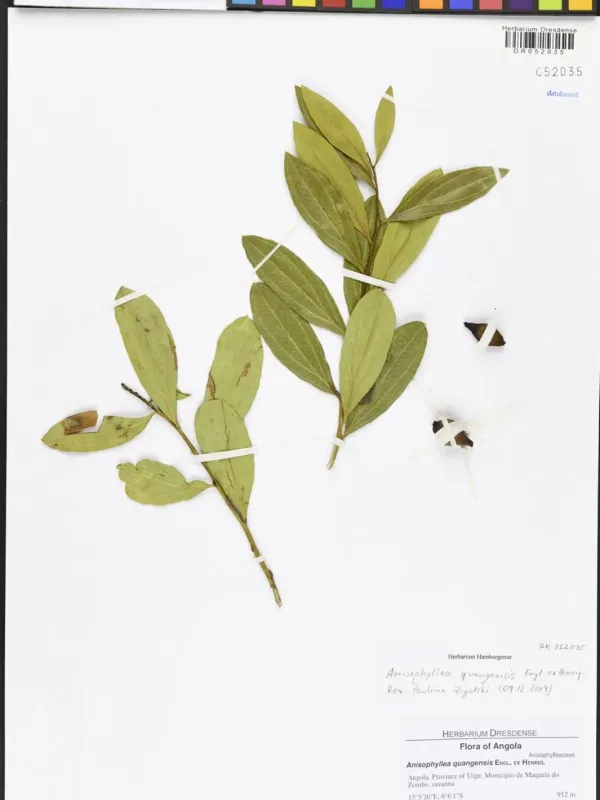
Description
Growing requirements
Anisophyllea quangensis is a woody plant belonging to the family Anisophylleaceae, native to the savanna and woodland regions of tropical Africa. It is adapted to thrive in harsh environments, characterized by seasonal rainfall patterns and high average temperatures.
The plant requires well-drained soil, often found in sandy or loamy landscapes. It exhibits significant drought tolerance, allowing it to survive in areas where water availability is limited for extended periods of the year.
Botanically, it typically grows as a tree or a large shrub. Its leaves are coriaceous, providing a natural defense against excessive water loss. This morphology ensures its survival in open, sun-exposed savanna ecosystems.
For cultivation purposes, sufficient sunlight is the primary requirement. Anisophyllea quangensis performs best in full exposure, where photosynthesis can proceed at maximum capacity, supporting both vegetative growth and fruit production.
The species serves as a source of food in its native regions, where the fruits are gathered for local consumption. Its ecological importance extends to supporting local biodiversity, as the plant provides shelter and resources for various insects and small fauna.
Yield
The yield of Anisophyllea quangensis is naturally inconsistent, as it is primarily a wild-harvested crop. Environmental stressors such as extreme heat and irregular rainfall directly impact the number of fruits produced by individual trees each season.
Harvesting is usually carried out during the end of the rainy season when the fruits reach maturity. The traditional method involves manual collection, which is labor-intensive but necessary to ensure the selection of ripe and high-quality produce.
Research into the domestication of this plant is limited, but experts suggest that proper spacing and moisture management could significantly improve fruit output in a controlled farming environment.
Protection of the root zone and canopy is crucial for maintaining yield over several years. Preventing soil erosion around the base of the trees helps ensure the plant can access the necessary minerals for sustained growth and reproduction.
Currently, the economic potential of this plant is largely untapped, but there is interest in promoting its cultivation as a sustainable fruit source for tropical regions facing food security challenges.
Main diseases and pests
The plant faces several threats from local pests, particularly borers that target the woody stem and can weaken the structure of the tree. Effective monitoring is essential to prevent large-scale infestations.
Fungal infections can occur during the humid transitions between seasons, affecting the foliage and potentially reducing photosynthetic efficiency. Ensuring good air circulation within the tree canopy is a key preventive measure.
In some regions, uncontrolled wildfires are a significant risk. Although the species has some natural resistance to fire, repeated burnings can severely deplete the plant's nutrient reserves and inhibit its fruit-bearing capacity.
Competition with invasive grasses can also stunt the growth of young seedlings. Clear weeding around the base of the plant is recommended during the initial stages of development to give it a competitive advantage.
Finally, improper harvesting techniques that cause physical damage to branches can create entry points for pathogens. Training in sustainable pruning and gathering methods is recommended for those working with this species.