
Trichoscypha acuminata
Trichoscypha acuminata
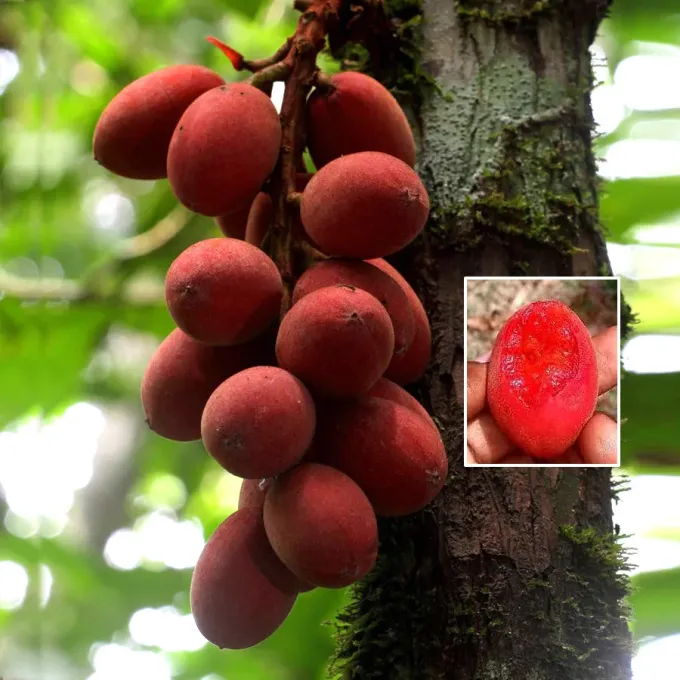
Description
Sowing dates
Propagation of Trichoscypha acuminata in cultivation is primarily carried out through seeds or stem cuttings. Seeds require immediate planting after extraction from the fruit, as they rapidly lose viability upon drying.
Sowing is conducted in loose, well-draining substrate rich in organic matter within a greenhouse or humid nursery environment. The optimal temperature for seed germination is 25–28 degrees Celsius under conditions of stable high humidity.
Vegetative propagation via cuttings requires the use of rooting hormones and the maintenance of constant misting to prevent moisture loss through the leaves. This method allows for faster production of fruiting specimens compared to seed propagation.
Transplanting young plants to their permanent location is performed once they reach a height of 30–40 centimeters. It is crucial to provide shading for seedlings during the initial adaptation phase to the open field.
Planting density is determined by the intensity of land use, but to ensure proper crown development, it is recommended to maintain a spacing of at least 6–8 meters between trees.
Growing requirements
Trichoscypha acuminata belongs to the Anacardiaceae family and is a typical representative of the humid tropical forests of West and Central Africa. The plant is highly sensitive to temperature regimes and cannot tolerate even short-term frost.
Fertile, deep soils with a neutral or slightly acidic reaction are necessary for the normal development of the crop. Waterlogging in the root zone is detrimental to the plant, therefore sites with natural drainage on slopes or elevated terrain are preferred.
The crop requires high atmospheric humidity throughout the year, which makes cultivation in arid regions impossible without establishing a specific microclimate. The optimal rainfall level for the species ranges from 2000 to 3000 millimeters per year.
The light requirement for this plant is partial shade or diffused light in the juvenile stage, whereas mature trees can withstand full exposure provided there is sufficient soil moisture.
Application of balanced organic fertilizers in the root zone promotes faster vegetative growth and increases the overall viability of the plant during its first years of life.
Yield
Trichoscypha acuminata is valued as a fruit tree, producing edible fruits that resemble certain mango varieties in taste and texture. Yield depends on the age of the tree and environmental conditions.
Fruits are harvested during the biological ripening stage when their skin acquires a characteristic deep color. Ripe fruits have a delicate flesh that is prone to rapid damage during transport.
Economic use includes fresh consumption as well as processing for juices, jams, and jellies. The bark and roots of the plant are frequently utilized in local traditional medicine.
The seasonality of fruit harvesting is usually extended, allowing for a continuous supply of produce in small volumes over several months.
The economic potential of the crop is limited, as it is more commonly found as part of agroforestry systems or in home gardens rather than on a commercial industrial scale.
Main diseases and pests
The main threats to Trichoscypha acuminata include fungal infections of the root system caused by excessive moisture and water stagnation. This leads to the development of root rot and gradual wilting of the tree.
The leaf apparatus can be affected by various types of leaf spots, especially in crowded plantations with poor crown ventilation. Timely sanitary pruning is recommended for prevention.
Pests such as fruit flies can significantly reduce the marketable yield by damaging developing fruits. The use of pheromone traps is the most environmentally friendly method for insect population control.
Aphids and scale insects, which feed on the sap of young shoots, also pose a serious threat as they cause leaf deformation and weaken the plant's overall immune system.
Nutrient imbalances in the soil often provoke chlorosis, which renders the tree vulnerable to secondary infections transmitted by insect vectors.
Harvesting
Harvesting is performed exclusively by hand due to the delicate structure of the fruits, which are easily bruised and lose their market appeal if handled carelessly.
Harvesters conduct daily rounds of the plantations during the ripening period, selecting specimens that have reached full maturity, as the fruits do not ripen properly after being harvested.
After harvesting, fruits must be delivered as quickly as possible to the processing or sales point, considering their short shelf life in tropical climatic conditions without refrigeration.
To extend shelf life, individual packaging is often used, which protects the thin skin of the fruit from mechanical damage and excessive moisture loss.
The collected harvest is sorted by maturity and size, with damaged fruits immediately sent for processing to avoid the development of decay in the bulk crop.