
Seidlitzia stocksii
Seidlitzia stocksii
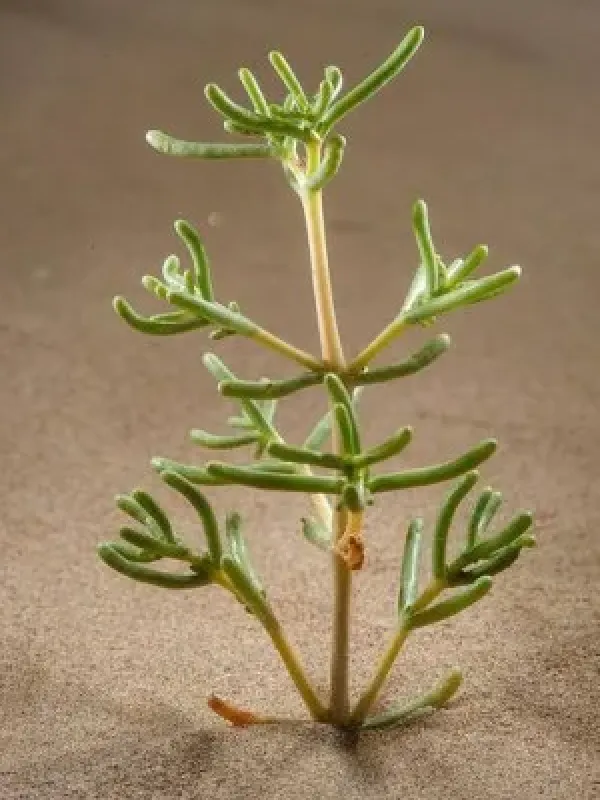
Description
Sowing dates
Seidlitzia stocksii is a perennial halophytic shrub belonging to the Amaranthaceae family, perfectly adapted to the harsh conditions of arid zones. The plant's seeds are characterized by a high ability to germinate when sufficient moisture is available after a dormancy period in saline substrates.
The optimal time for sowing this crop occurs after seasonal rainfall, when the salinity level of the topsoil temporarily decreases. This allows the plant to establish roots before the onset of peak temperatures and the dry season.
In its natural habitat, seeds are dispersed by wind; however, in controlled cultivation, surface sowing followed by light mulching is recommended to retain moisture around the seed. Planting depth should not exceed 1–2 centimeters to avoid hindering germination.
The temperature range for successful germination is between +20 and +30 degrees Celsius. Given its natural distribution in desert and semi-desert regions, the seeds show excellent germination rates precisely under conditions of sharp daily temperature fluctuations.
Planting density is determined by the intended purpose of the plantation. When establishing phytoremediation plantings, sparse sowing is practiced, whereas for biomass production, density may be increased to form a continuous cover.
Growing requirements
The crop is extremely resistant to high soil salinity, making it promising for the development of saline lands unsuitable for traditional agriculture. Seidlitzia stocksii is capable of accumulating salts in its tissues, effectively extracting them from the soil solution.
The plant prefers loose sandy or loamy soils but exhibits high plasticity and can grow on gypsum or salt marsh soils. An important requirement is the absence of waterlogging, as the root system is sensitive to prolonged moisture excess.
Seidlitzia stocksii requires intense light and does not tolerate shading. Under conditions of light deficiency, the growth of the above-ground part slows down, leading to a decrease in overall productivity and bush biomass.
Climate requirements include high resistance to drought and extreme air temperatures. The plant can survive in conditions of prolonged lack of rainfall by entering a state of physiological dormancy, which prevents tissue death.
Agricultural management practices are minimal. The main focus is on maintaining the natural soil structure and preventing the erosion to which the territories where this plant is cultivated are susceptible.
Yield
The economic value of the crop lies in the production of biomass, which contains a significant amount of mineral substances and organic compounds. Yield depends on the level of moisture during the growing season and the composition of salts in the soil profile.
Raw material harvesting is usually carried out at the end of the growth cycle, when the content of useful components in the stems and leaves reaches its maximum. This allows for the production of high-quality technical raw materials for industrial processing.
In dry conditions, biomass growth is moderate, which is compensated by a high concentration of target substances. With additional drip irrigation in salt marsh conditions, a significant increase in the volume of marketable product per hectare can be achieved.
Seidlitzia stocksii is used as a source of soda and other salts, which was historically utilized by local populations. Modern research considers it a potential source of renewable technical oils and additives.
Economic efficiency of cultivation is determined by low maintenance costs, as the crop does not require mineral fertilizers or expensive pesticides due to its high natural immunity.
Main diseases and pests
The main threats to the plantings are specific pests of desert ecosystems, such as locusts, which can cause significant damage to the above-ground part during years of mass reproduction. Pest control is difficult due to the large areas of cultivation.
Fungal diseases are extremely rare, mainly occurring when the soil water regime is disrupted. Under conditions of excessive moisture, the root system may be affected by root rot, leading to the death of the bush.
Improper livestock grazing management can be a serious factor in crop degradation. Although the plant is eaten by camels and small ruminants, uncontrolled grazing leads to depletion of biomass reserves and soil exposure.
Wind erosion, combined with a lack of proper care for young crops, is a key abiotic risk factor. At the seedling stage, strong dust storms can completely destroy young plants that have not yet developed.
To prevent losses, it is recommended to rotate grazing areas and create protective belts of other salt-tolerant shrub species, which helps stabilize the soil layer and reduce the risk of physical damage to the crop.
Harvesting
Harvesting is carried out by mechanized or manual methods depending on the area and local conditions. The main method is cutting the above-ground part of the bush, where it is important not to damage the root system to ensure regeneration.
After harvesting, the biomass is subjected to primary drying directly in the field, which facilitates subsequent transport and storage. Drying should be carried out under conditions of natural ventilation and direct sunlight.
The collected material can be used as fuel, a raw material for potash production, or as an additive in fodder rations after preliminary processing. It is important to monitor the quality of the raw material, excluding foreign impurities.
The frequency of harvesting is established based on the plant's life cycle. Usually, efficient biomass collection is possible once a year, allowing the plant to recover after the growing season and accumulate nutrient reserves in the roots.
Harvesting techniques should take environmental aspects into account so as not to disrupt the integrity of the soil crust that protects the desert ecosystem. A sensible approach to exploitation allows the use of Seidlitzia plantations for many years without the need for reseeding.