
Seidlitzia rosmarinus
Seidlitzia rosmarinus
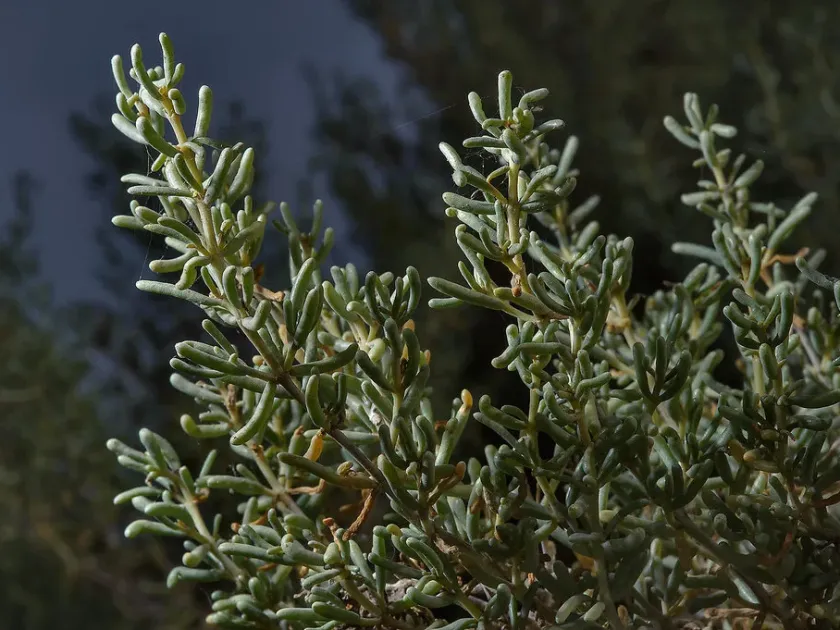
Description
Sowing dates
Seidlitzia rosmarinus is typically sown during the spring season when soil temperatures are stable enough to support germination.
The seeds require consistent moisture to initiate the germination process, even in environments characterized by high salinity levels.
Planting depth should be shallow, usually ranging between 1 and 2 centimeters, to allow for optimal seedling emergence through the soil crust.
It is essential to maintain proper spacing between plants to prevent competition for limited water resources in dryland environments.
Light compaction of the soil post-seeding is recommended to establish good seed-to-soil contact, which significantly improves overall germination rates.
Growing requirements
Seidlitzia rosmarinus is an obligate halophyte, which means it thrives in highly saline conditions where conventional crops would fail.
The plant demonstrates exceptional tolerance to arid climates, relying on its succulent tissues to manage internal water storage during droughts.
High levels of solar radiation are necessary for the plant to achieve its maximum biomass production during the growth cycle.
The ideal soil profile for this species is a saline-alkaline substrate, typical of desert and semi-desert regions where sodium content is elevated.
Proper field drainage is crucial to ensure that while the plant tolerates salts, it does not withstand prolonged waterlogging, which can cause root decay.
Yield
The biomass yield of Seidlitzia rosmarinus is strongly influenced by the degree of soil mineralization and the availability of water during the growing season.
In industrial contexts, the plant is harvested for its high mineral content, particularly for the extraction of specific chemical compounds like potash.
Consistent productivity can be achieved on degraded land, making this crop a valuable asset for the restoration and exploitation of saline soils.
Regular field management, including the maintenance of optimal planting density, contributes to higher yields per unit of land area.
The harvest should be planned for the period of peak physiological maturity to ensure the maximum concentration of beneficial substances in the stems.
Main diseases and pests
While Seidlitzia rosmarinus is hardy, it can be susceptible to specific desert-dwelling insect pests that feed on its succulent green parts.
The high salinity of the plant's tissues acts as a natural deterrent against many pathogenic fungi, minimizing the risk of systemic diseases.
One of the significant risks is the unintentional freshening of the soil, which can reduce the plant's competitive advantage over non-halophytic vegetation.
Weed infestation is generally low in these specific saline habitats, as few other species can survive in such harsh, salty environments.
Field monitoring should focus on identifying early signs of pest pressure and utilizing environmentally safe control measures to protect the stand.
Harvesting
The harvest typically occurs toward the end of the summer when the plant completes its life cycle and accumulates a high proportion of dry matter.
Techniques involve mechanical harvesting of the aerial biomass, which is then dried in the field to reduce moisture content.
Sun-drying is the preferred method, as it is efficient and helps preserve the structural integrity of the harvested material.
The dried mass is then processed or ground, preparing it for transport and subsequent use in industrial or chemical processing facilities.
Proper storage is essential; the harvested material should be kept in ventilated, dry areas to prevent degradation of its mineral components.