
Girgensohnia oppositiflora
Girgensohnia oppositiflora
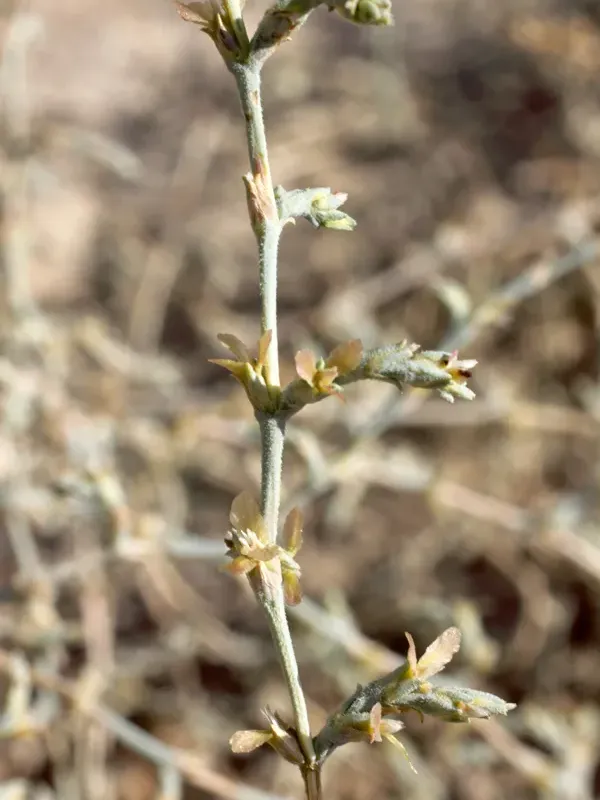
Description
Growing requirements
Girgensohnia oppositiflora is a perennial semi-shrub belonging to the Amaranthaceae family. It is a highly specialized plant adapted to extreme arid environments, characterized by high temperatures and poor, often saline, soil conditions.
Native to regions of Central Asia, Iran, and Afghanistan, this species is a typical halophyte. Its ability to thrive in salt-affected areas makes it a subject of interest for agricultural land reclamation projects aimed at restoring degraded lands.
Botanically, it is recognized by its opposite leaves and a deep root system. This morphology allows the plant to extract moisture from deep soil layers, ensuring survival during prolonged droughts typical of its natural range.
The plant requires full sun exposure and well-drained, sandy, or alkaline soils. It is extremely sensitive to waterlogging, which can cause root rot; therefore, moisture management is critical if any form of cultivation or propagation is attempted.
хозяйственном использовании its primary value lies in phytoremediation and soil stabilization. In arid agricultural systems, it serves as a robust plant cover that prevents desertification and supports the restoration of pastoral lands.
Main diseases and pests
The primary threat to the stability of these plants is overgrazing by livestock. Excessive animal activity during the vegetative season damages new growth and compacts the soil, hindering the survival of younger specimens.
Fungal diseases are rarely observed in the wild. If present, they are usually a consequence of improper irrigation or excessive humidity, which contradicts the physiological needs of this desert species.
Pests such as locusts or grasshoppers may occasionally target the foliage, but the high salt content in the tissues of the plant often acts as a natural deterrent against many generalist herbivores.
Competition from weeds is minimal in its native desert habitat. However, during the establishment phase of reclamation projects, providing a clean environment can increase the success rate of plant survival.
Effective management requires controlled access to grazing areas and avoiding agricultural practices that involve heavy irrigation or excessive nutrient application, which are unnecessary for this hardy species.