
Cyperus prolifer
Cyperus prolifer
Description
Growing requirements
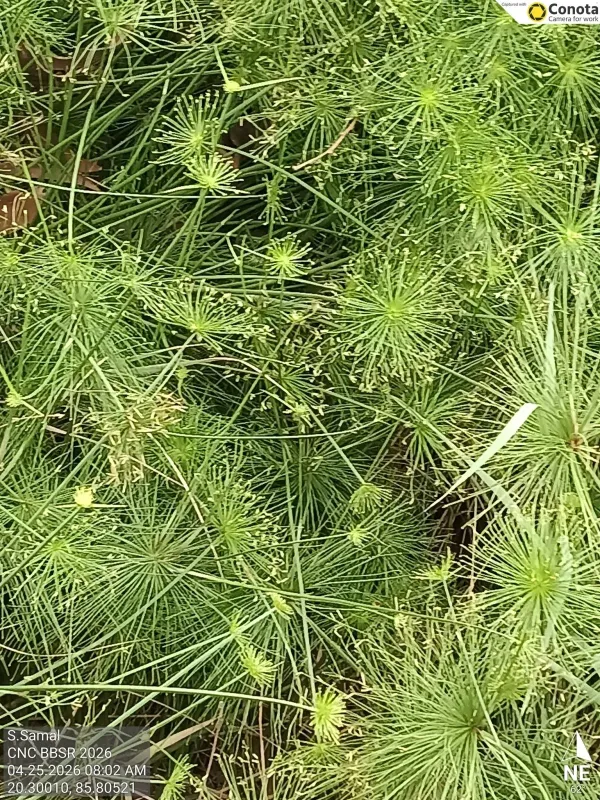
Cyperus prolifer, commonly known as the dwarf papyrus, is a member of the Cyperaceae family. It is a rhizomatous perennial native to tropical regions of Africa, specifically adapted to wetlands and shallow aquatic environments.
The plant is distinguished by its upright, slender stems topped with whorls of bracts that radiate outwards like spokes on a wheel. This structural characteristic provides a graceful, fountain-like appearance favored in water gardening.
This species requires high ambient temperatures and consistent moisture to thrive. It is highly sensitive to frost, necessitating protection or indoor storage in cooler climates where the temperature drops below freezing.
In terms of soil and media, it grows best in nutrient-rich, heavy organic substrates. In water features, it can be planted directly into submerged pots, allowing the root system to extract nutrients from the water column.
Agrotechnical maintenance focuses on division and propagation. As the plant expands its root system, it benefits from thinning to maintain vigour and prevent the depletion of localized nutrients within the growing medium.
Main diseases and pests
Spider mites represent a significant threat in indoor environments with low humidity. Regular misting and maintaining proper air moisture levels are essential to prevent infestation and leaf browning.
Root rot is a common issue when stagnant conditions exist without adequate oxygenation. Ensuring that water surrounding the plant does not become anaerobic is critical for maintaining healthy root tissues.
Mealybugs can cluster in the axils of the bracts, protected from external treatment. Manual removal using a cotton swab dipped in alcohol is an effective non-chemical control measure for small infestations.
Aphids tend to colonize the emerging tender shoots, potentially stunting growth. Prompt application of mild insecticidal soaps or horticultural oils is usually sufficient to manage these populations.
Leaf spot diseases, often caused by pathogenic fungi in humid and poor-ventilated spaces, can diminish the plant's aesthetic appeal. Improving air circulation around the canopy is the primary method of prevention and control.