
Nordmann fir
Abies nordmanniana (Steven) Spach
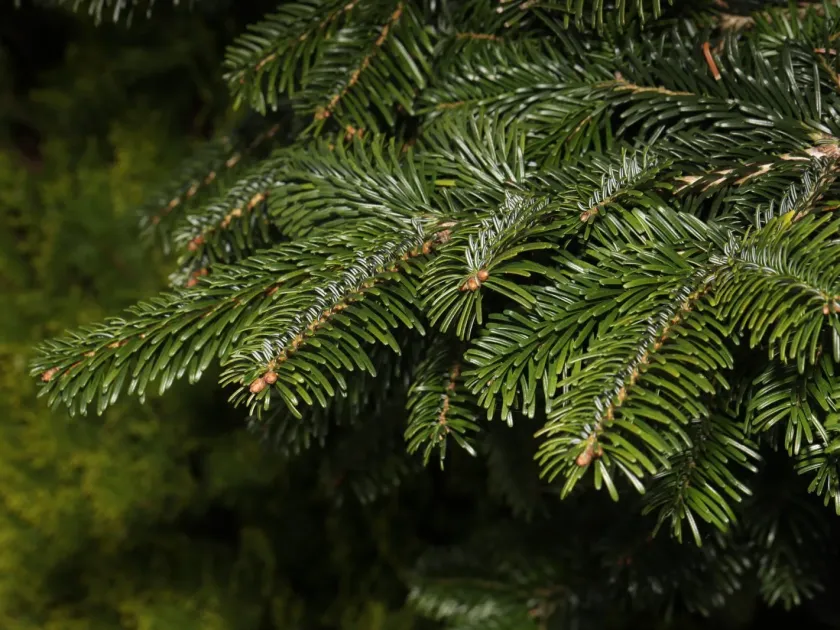
Description
Sowing dates
The propagation of Nordmann fir in commercial nurseries is primarily performed through seed sowing, requiring careful selection of high-quality seeds for maximum yield.
Seeds must undergo a stratification process for several weeks in cool, moist conditions to break dormancy and ensure uniform germination across the seedbed.
Sowing typically takes place in early spring, using well-structured sandy loam soils that facilitate root development while preventing excessive moisture retention.
During the initial growth stages, seedlings require significant shading, as they are highly sensitive to intense direct sunlight, which can cause significant tissue damage.
Maintaining consistent soil moisture is vital during the first two years of growth, as the root system of young Abies nordmanniana is delicate and sensitive to drought.
Growing requirements
The Nordmann fir, belonging to the Pinaceae family, is native to the Caucasus mountains, where it thrives in regions with stable, moderate climate conditions.
The ideal soil for this species is a deep, fertile, slightly acidic, and well-drained substrate that allows for the extensive development of the taproot system.
The species is remarkably shade-tolerant, which makes it suitable for growth in understory conditions, though full development requires adequate access to light.
High relative humidity is a prerequisite for healthy growth, as the Nordmann fir struggles in arid environments and is prone to needles drop in dry air.
Protection from extreme wind and late spring frosts is necessary in the early years of cultivation to ensure the tree maintains its characteristic conical shape.
Yield
Nordmann fir is widely cultivated as a premium Christmas tree, valued for its symmetrical form, glossy dark green needles, and excellent needle retention post-harvest.
Achieving high-quality yield requires rigorous management of plantation density and frequent pruning to ensure the density and uniformity of the branches.
Growth rates for the first few years are slow, after which the tree enters a phase of accelerated vertical growth, typically reaching commercial size within 7 to 10 years.
Fertilization regimes based on soil analysis are essential to ensure the trees maintain their rich color and resistance to environmental stress throughout the growth cycle.
Efficient plantation management includes regular monitoring for growth anomalies, ensuring that every tree meets strict market standards for height and form.
Main diseases and pests
The balsam woolly adelgid and various species of aphids are the primary insect threats to Nordmann fir, capable of significantly damaging new needle growth.
Needle cast diseases, caused by various fungi, can lead to substantial foliage loss, particularly in plantations with poor air circulation and high humidity.
Root rot caused by Phytophthora species is a critical threat, especially in poorly drained soils, and can lead to the rapid decline and death of mature trees.
Regular monitoring and integrated pest management (IPM) practices are required to detect infestations early and minimize the use of broad-spectrum chemicals.
Cultural practices such as adequate spacing between trees are vital to reduce the risk of disease transmission and promote healthy airflow throughout the plantation.
Harvesting
Harvesting usually occurs in late autumn when the trees have entered winter dormancy, ensuring maximum freshness and durability after the tree is cut or lifted.
For high-value potted or balled-and-burlapped trees, mechanical equipment is used to carefully extract the root ball without causing significant structural damage.
Netting the trees immediately after harvest is essential for protection, allowing for easier handling and shipping without damaging the delicate branch structure.
Quality grading is performed on-site, where trees are categorized based on their symmetry, fullness, and height to ensure consistent product delivery to retailers.
Storage of harvested trees requires cool, shaded environments to maintain needle moisture and color, ensuring the final product meets consumer expectations for holiday decor.