
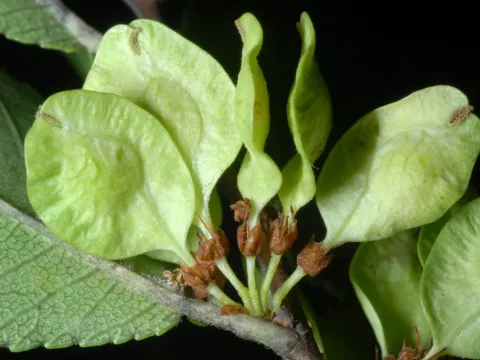
Elm
Ulmus L.
Elm seeds are typically sown in the spring immediately following harvest, as their viability decreases rapidly if stored in improper conditions.
What the section contains
 American elm
Ulmus americana L.
American elm
Ulmus americana L.
 Cedar elm
Ulmus crassifolia Nutt.
Cedar elm
Ulmus crassifolia Nutt.
 Chinese elm
Ulmus parvifolia Jacq.
Chinese elm
Ulmus parvifolia Jacq.
 Chinese elm
Ulmus parvifolia Jacq. x Ulmus rubra Muhl.
Chinese elm
Ulmus parvifolia Jacq. x Ulmus rubra Muhl.
 David elm
Ulmus davidiana Planch.
David elm
Ulmus davidiana Planch. x Ulmus minor Mill.
David elm
Ulmus davidiana Planch.
David elm
Ulmus davidiana Planch. x Ulmus minor Mill.
 David elm
Ulmus davidiana Planch. x Ulmus parvifolia Jacq.
David elm
Ulmus davidiana Planch. x Ulmus parvifolia Jacq.
 Dutch elm
Ulmus x hollandica Mill.
Dutch elm
Ulmus x hollandica Mill.
 European white elm
Ulmus laevis Pall.
European white elm
Ulmus laevis Pall.
 Field Elm
Ulmus minor Mill.
Field Elm
Ulmus minor Mill.
 Hoary elm
Ulmus minor Mill. subsp. canescens (Melville) Browicz & Ziel.
Japanese elm
Ulmus davidiana Planch. var. japonica (Sarg. ex Rehder) Nakai
Hoary elm
Ulmus minor Mill. subsp. canescens (Melville) Browicz & Ziel.
Japanese elm
Ulmus davidiana Planch. var. japonica (Sarg. ex Rehder) Nakai
 Siberian elm
Ulmus pumila L.
Siberian elm
Ulmus pumila L.
 Slippery elm
Ulmus rubra Muhl.
Slippery elm
Ulmus rubra Muhl.
 Wych elm
Ulmus glabra Huds.
Wych elm
Ulmus glabra Huds.
Elm
Stratification of seeds in a cool, moist environment for several weeks is a recommended practice to break dormancy and ensure uniform germination rates.
Sowing in nursery beds should be performed at a shallow depth of approximately 1 to 2 centimeters to prevent seedling stress during emergence.
Adequate irrigation is crucial during the initial stages of seedling development to maintain soil moisture and promote deep root establishment.
Propagation through green cuttings is also viable and often used in forestry to maintain specific genetic traits and improve overall stand uniformity.
The Elm belongs to the Ulmaceae family, comprising deciduous trees known for their rapid growth rate and robustness in various environmental conditions.
These trees thrive in deep, fertile, and well-drained loamy soils, although they exhibit high tolerance for soil moisture variability in floodplains.
Elm species are generally shade-tolerant in their youth, but they require full sun exposure as they mature to reach their maximum growth potential.
They are highly valued for their wind-breaking properties, making them an ideal choice for shelterbelts and rural landscape restoration projects.
Given their historical resilience, they are extensively used in urban planning for their ability to withstand the harsh conditions of metropolitan areas.
Dutch Elm Disease (DED) remains the most critical threat to the genus, causing massive losses due to vascular blockage and rapid canopy decline.
Verticillium wilt is another significant pathogen that infects the tree through the root system, causing internal tissue discoloration and wilting.
Anthracnose and bacterial canker often compromise the structural integrity and aesthetic value of the tree, requiring integrated pest management.
Rhizomorph root rot, often associated with poor drainage, can cause irreversible damage to the root system, eventually leading to tree death.
- Dutch Elm Disease
- Verticillium wilt
- Anthracnose
- Bacterial canker
- Rhizomorph root rot