
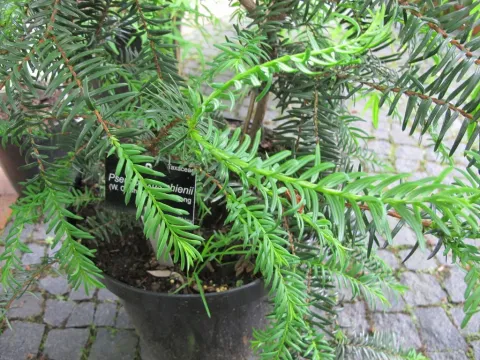
Pseudotaxus
Pseudotaxus
Pseudotaxus is a monotypic genus in the Taxaceae family, represented by a single species, Pseudotaxus chienii. This rare evergreen conifer is native to the subtropical mountainous regions of southern and eastern China.
What the section contains

Pseudotaxus
Botanically, it is characterized by its linear, bright green needles that feature two distinct white stomatal bands on the underside. It grows as a small shrub, maintaining a dense and elegant foliage structure throughout the year.
To cultivate Pseudotaxus successfully, one must provide a location with partial shade, as it is accustomed to the forest understory in its natural habitat. Direct afternoon sun should be strictly avoided to prevent needle scorching.
The soil requirements are specific: it thrives in acidic to neutral, well-drained loamy soils enriched with organic matter. A robust drainage system is mandatory to prevent root rot, which is the most frequent cause of plant mortality in improper conditions.
Climate management is crucial for the survival of this species. It prefers high atmospheric humidity and cool, mild temperatures. In colder regions, providing a sheltered position and thick organic mulch is essential to protect the shallow root system from extreme winter frost.
The primary threat to Pseudotaxus is the onset of fungal diseases related to poor soil drainage and stagnant air. Root rot pathogens often thrive when soil aeration is insufficient, necessitating immediate corrective drainage measures.
Insect pests such as scale insects and spider mites are frequent invaders of this species. These pests tend to colonize the undersides of the foliage, often going unnoticed until significant damage or chlorosis appears on the needles.
Management strategies involve the integration of systemic fungicides during the early spring and prophylactic monitoring during the warmer months. Maintaining appropriate humidity levels while ensuring airflow reduces the environment's favorability for these pathogens.
In case of pest infestation, horticultural oils or specialized acaricides are recommended. It is vital to apply these treatments evenly across the foliage, paying special attention to the interior parts of the shrub where pests are more likely to thrive.
Periodic pruning of dead or diseased branches is a vital horticultural practice for Pseudotaxus. By keeping the plant clean and providing adequate space for ventilation, the grower significantly lowers the risks of both pest outbreaks and microbial infection.