
Ungnadia
Ungnadia
Ungnadia (Ungnadia speciosa), commonly known as the Mexican buckeye, is a deciduous shrub or small tree within the Sapindaceae family. Native to Texas, New Mexico, and northern Mexico, it is a resilient plant well-adapted to arid environments.
What the section contains

Ungnadia
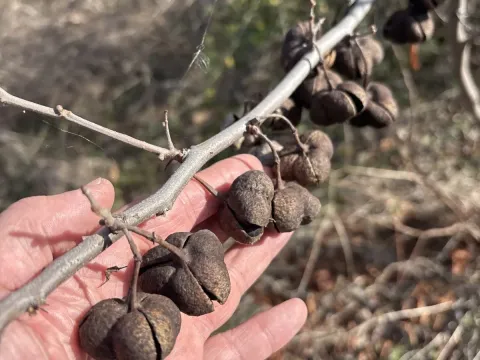
The plant features pinnately compound leaves and clusters of showy pink flowers that emerge in early spring, often before the foliage. Its fruit is a leathery capsule containing large, dark, toxic seeds that resemble those of the horse chestnut.
Regarding climate, Ungnadia thrives in regions with hot, dry summers and requires significant solar exposure to reach full maturity. It is highly drought-tolerant, making it an excellent candidate for xeriscaping and sustainable garden design in dry climates.
The soil requirements prioritize excellent drainage. It grows naturally on limestone outcrops and rocky slopes, so it should be planted in loose, non-compacted soil to prevent root rot caused by stagnant moisture.
While primarily an ornamental species, Ungnadia serves as a valuable nectar source for bees and butterflies. Its ability to survive with minimal intervention makes it a low-maintenance choice for public parks and private landscapes in suitable ecological zones.
Ungnadia is generally robust, but root rot remains the primary threat, usually triggered by waterlogged conditions or heavy, poorly drained clay soils.
Pests such as aphids and spider mites can occasionally affect the foliage, particularly during extended heatwaves when the plant is under moisture stress.
Leaf spot diseases may appear if the tree is located in a crowded area with poor air circulation, necessitating corrective pruning.
It is crucial to emphasize that all parts of the plant, especially the seeds, are toxic to humans and animals if ingested.
To ensure plant health, gardeners should avoid over-fertilizing and keep the base of the trunk clear of excessive organic mulch that could trap moisture.