
Pulasan
Nephelium ramboutan-ake (Labill.) Leenh.
Description
Sowing dates
Pulasan is primarily propagated through vegetative methods such as grafting or air layering to ensure the stability of the desired fruit traits.
Seed-based propagation is less common in commercial orchards because it does not reliably produce trees that mirror the quality of the parent plant.
Seeds must be planted immediately after extraction from the fruit, as they lose viability rapidly if allowed to dry out.
For young saplings, the ideal planting time is at the onset of the rainy season to provide sufficient moisture for root establishment.
Correct spacing is essential, with trees typically planted at intervals of 10 to 12 meters to allow for their expansive canopy growth over time.
Growing requirements
Pulasan is a tropical tree belonging to the Sapindaceae family, requiring warm, humid climates to thrive and produce fruit effectively.
The tree performs best in areas with high rainfall distributed throughout the year, as it is highly sensitive to prolonged drought periods.
Well-draining, fertile loamy soils are ideal, as the root system is susceptible to decay if exposed to waterlogged conditions.
A consistent ambient temperature is necessary throughout the growing season to support the physiological processes of the tree.
While the tree prefers full sun, protection from strong or drying winds is crucial to prevent damage to the delicate branches and foliage.
Yield
A grafted pulasan tree typically enters its first productive years between 5 and 7 years after the initial planting.
An adult tree can yield a substantial harvest, ranging from 100 to 300 kilograms of fruit depending on health, nutrition, and environmental factors.
Proper canopy management through pruning is vital, as it allows light to penetrate the inner layers of the tree, significantly boosting yield.
Pollination by insects, particularly bees, plays a critical role in the fruit set, making the presence of pollinators an important factor in orchard management.
Yield consistency can be supported by regular fertilization with organic or balanced mineral inputs to replace nutrients exported via the harvest.
Main diseases and pests
Young pulasan plants are prone to damage from leaf-eating insects and sap-sucking pests like mealybugs and aphids that can weaken growth.
High humidity levels increase the risk of fungal infections, which may affect the leaves or, in severe cases, the tree's vascular system.
Fruit flies represent a primary threat to production, as they can quickly spoil the ripening fruit if preventive measures are not taken.
Integrated Pest Management (IPM) strategies, including biological controls and orchard hygiene, are recommended to maintain tree health.
Regular inspection of the canopy and trunk is advised to detect infestations or signs of decay before they become widespread across the orchard.
Harvesting
Harvesting pulasan is a manual process, as the fruit's outer skin is soft and easily bruised, which could compromise its quality.
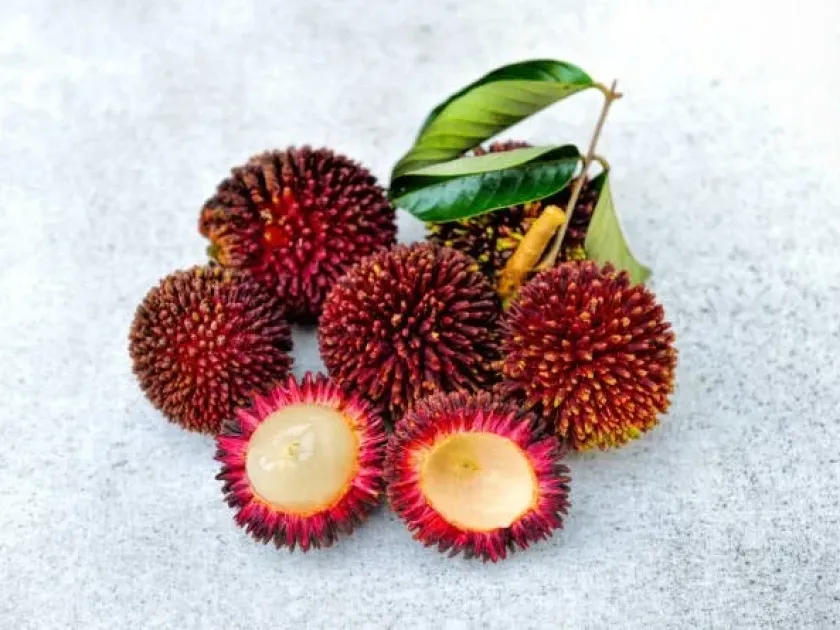
The harvest window is determined by the skin color changing to a deep red or maroon, indicating that the fruit has reached its peak sweetness.
Fruit clusters are carefully clipped from the tree, ensuring that the stem is kept intact to prevent rapid moisture loss and decay.
Post-harvest handling is critical due to the short shelf life of the fruit; it should be kept in cool, shaded environments to maintain freshness.
Ideally, pulasan should be marketed or consumed within a few days of harvest to ensure the consumer experiences its superior flavor profile.