
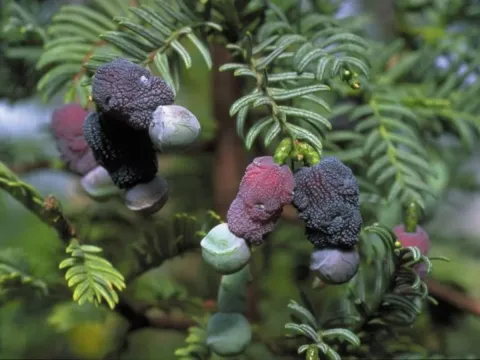
Acmopyle
Acmopyle
Acmopyle is a genus of evergreen coniferous trees and shrubs belonging to the Podocarpaceae family. These plants are characterized by a slow growth rate and specific environmental requirements, making them exotic specimens for botanical gardens and specialized plant collections.
What the section contains


Acmopyle
In its natural habitat, Acmopyle is found in the tropical rainforests of New Caledonia and Fiji. The crop prefers a humid, cool climate typical of mountain forests, where high atmospheric humidity prevails and temperature fluctuations remain minimal.
Soil requirements for the successful development of this genus include well-drained, acidic substrates rich in organic matter. The plant is extremely sensitive to waterlogging at the roots, so quality drainage layers are essential in container or greenhouse cultivation.
The light regime for Acmopyle should be moderate. The plant does not tolerate direct midday sunlight, preferring diffused light or partial shade. In greenhouse conditions, it is necessary to maintain a stable microclimate with protection from drafts.
Propagation of Acmopyle is typically carried out via seeds, although germination success in artificial conditions can be low. An alternative method is cuttings in professional nurseries, utilizing rooting stimulants and strict control over substrate moisture levels.
The primary threats to Acmopyle are associated with improper moisture management and poor soil composition. Over-saturation of the substrate often leads to root rot caused by fungal pathogens, which is the leading cause of death for young specimens in cultivation.
Pests that affect Acmopyle are common to indoor conifers. These include mealybugs and spider mites, which thrive in low-humidity environments and areas with poor air circulation within greenhouse structures.