
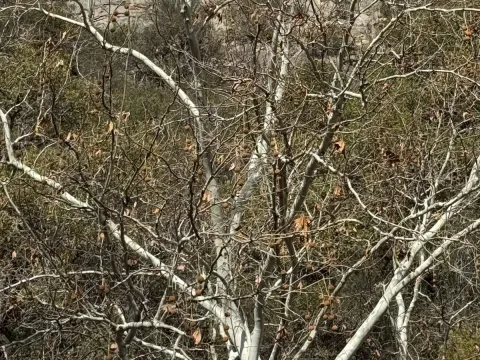
Arizona Sycamore
Platanus wrightii
The Arizona Sycamore (Platanus wrightii) is a deciduous tree belonging to the Platanaceae family. Native to the southwestern United States and northwestern Mexico, it is commonly found along riparian corridors, highlighting its natural adaptation to areas with reliable water access.
What the section contains
Arizona Sycamore
When cultivating this species, site selection is paramount. The tree thrives in deep, fertile soils that provide sufficient moisture while maintaining good drainage. It is not suitable for compacted clays where root development can be severely restricted.
Light requirements for Platanus wrightii are high; it demands full sun to achieve its characteristic broad, spreading crown. Proper spacing is essential in plantation or landscape settings to ensure that individual trees receive adequate light exposure for optimal photosynthesis.
Climate preferences for the Arizona Sycamore include warm, arid environments, provided there is access to ground moisture. It is generally tolerant of heat but may require protective measures during extreme weather events to maintain its overall vigor and growth rate.
Economic and utility applications are primarily focused on urban forestry and landscape architecture. Its rapid growth and aesthetic value, particularly the exfoliating white bark, make it a prized specimen for providing shade and enhancing environmental quality in public spaces.
Anthracnose remains the most significant disease threat to the Arizona Sycamore. This fungal infection typically targets young leaves and twigs, especially during cool, wet spring weather, necessitating preventative fungicidal programs to protect tree health.
Sycamore lace bugs represent a major pest concern for this species. These insects feed on the underside of leaves, causing significant chlorosis and premature defoliation, which detracts from the tree's ornamental beauty and reduces its annual carbon sequestration potential.
Powdery mildew can become a nuisance, particularly in shaded or poorly ventilated areas. The white powdery coating on leaves can interfere with gas exchange, requiring proper pruning techniques to increase canopy airflow and mitigate the impact of the pathogen.
Integrated Pest Management (IPM) strategies are highly recommended for large-scale plantings. By combining mechanical pruning, environmental monitoring, and targeted chemical treatments, growers can effectively manage pest populations while minimizing ecological disruption.
Long-term health depends on consistent monitoring of the trunk and branch structure. Identifying early signs of disease, such as bark lesions or unusual canopy thinning, allows for rapid intervention and ensures the longevity of the sycamore stand.