
California sycamore
Platanus racemosa
Description
Growing requirements
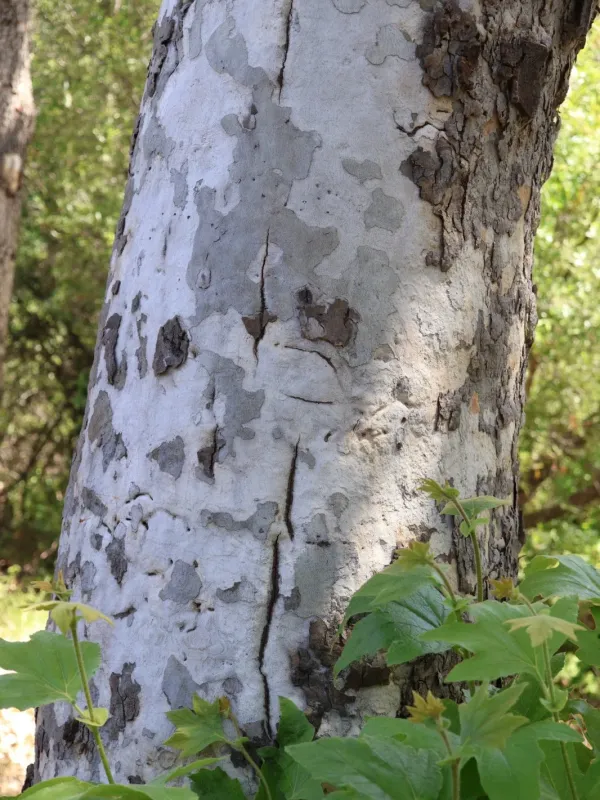
California sycamore is a member of the Platanaceae family. It is a large, deciduous tree known for its impressive stature, unique mottled bark, and deeply lobed leaves that provide significant shade.
The species is native to California and parts of Mexico, typically found in riparian habitats. It thrives along stream banks, river bottoms, and in canyons where the water table is accessible to its roots.
This tree requires full sun exposure to maintain its structural integrity and health. Inadequate light levels often lead to sparse canopy development and a reduction in the tree's overall vigor.
Soil preferences lean towards deep, moisture-retentive, and well-draining textures. While it tolerates occasional inundation, constant waterlogging of the roots should be avoided through proper site selection.
The climate requirement is characterized by mild to hot growing seasons. It is particularly well-suited to Mediterranean-type climates, though it exhibits tolerance to varied temperature fluctuations within its range.
Main diseases and pests
Sycamore anthracnose is the most common fungal disease affecting the species. It causes leaf blights and twig dieback, especially during cool, rainy spring seasons that favor fungal sporulation.
Sycamore lace bugs are prevalent pests that feed on the underside of leaves. Severe infestations lead to chlorosis and premature leaf drop, which can weaken the tree's health over several seasons.
Powdery mildew is another common issue, particularly in environments with poor air circulation or high humidity, resulting in a dusty white coating on leaves and stunted growth.
Bacterial scorch can be a serious issue for mature specimens, causing leaf edges to brown and die. Management involves minimizing stress and maintaining optimal hydration levels for the tree.
Integrated pest management strategies include maintaining tree hygiene by removing fallen leaves and twigs, which helps reduce the inoculum levels of pathogens that overwinter in plant debris.