
Golden Larch
Pseudolarix amabilis
Description
Growing requirements
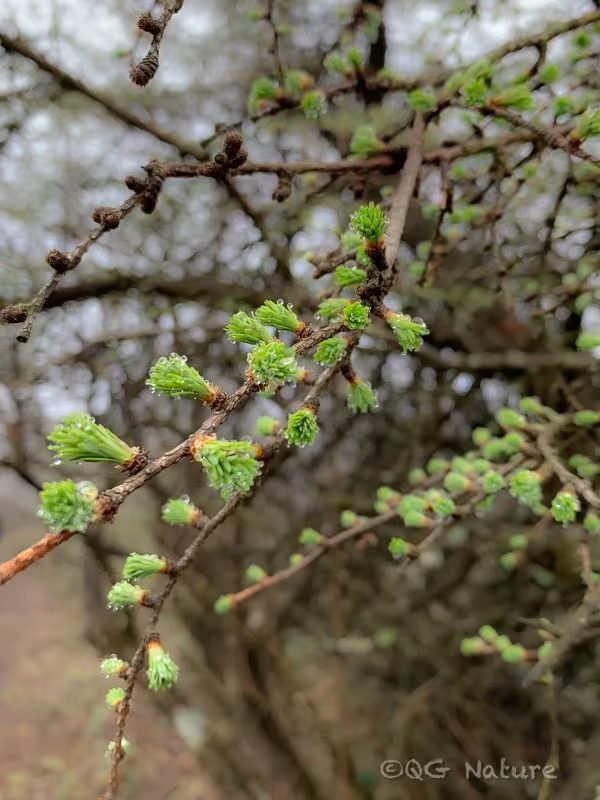
The Golden Larch (Pseudolarix amabilis) is a unique deciduous conifer belonging to the Pinaceae family. It is the only member of its genus, characterized by distinctive light-green needles that turn a brilliant golden yellow in autumn before falling.
Native to eastern China, the tree thrives in regions with moderate rainfall and cool summers. It prefers deep, acidic, and well-drained soils, typically found on mountain slopes in its natural habitat.
Cultivation requires a site with full sun or partial shade. While it is adaptable, it performs best when protected from extreme, drying winds and excessive heat, which can scorch the delicate foliage.
Soil drainage is critical for this species. Waterlogging must be strictly avoided as it can cause root rot, especially in younger specimens that are establishing their root systems in the landscape.
Maintenance involves regular watering during dry spells and the application of slow-release fertilizers formulated for acid-loving conifers. Proper mulching helps retain soil moisture and stabilizes temperature around the root zone.
Main diseases and pests
Golden Larch is generally robust, but it can be susceptible to fungal infections if planted in poorly ventilated areas with stagnant, humid air, which promotes the growth of mold and mildew.
Common insect pests include spider mites and aphids. These insects tend to attack trees under moisture stress, sucking sap from the needles and causing early discoloration or needle drop.
Effective management includes maintaining tree vigor through proper irrigation. Integrated pest management, including the use of neem oil or insecticidal soaps, is recommended when pest populations exceed acceptable thresholds.
Root rot caused by Phytophthora species is a serious concern in compacted or saturated soils. To mitigate this risk, gardeners should ensure the planting site has excellent drainage and avoid over-irrigation.
Regular monitoring of the foliage and branching structure allows for early detection of issues. Pruning should be kept to a minimum, focusing only on removing dead or damaged wood to maintain the tree's natural form.