
Keteleeria evelyniana
Keteleeria evelyniana
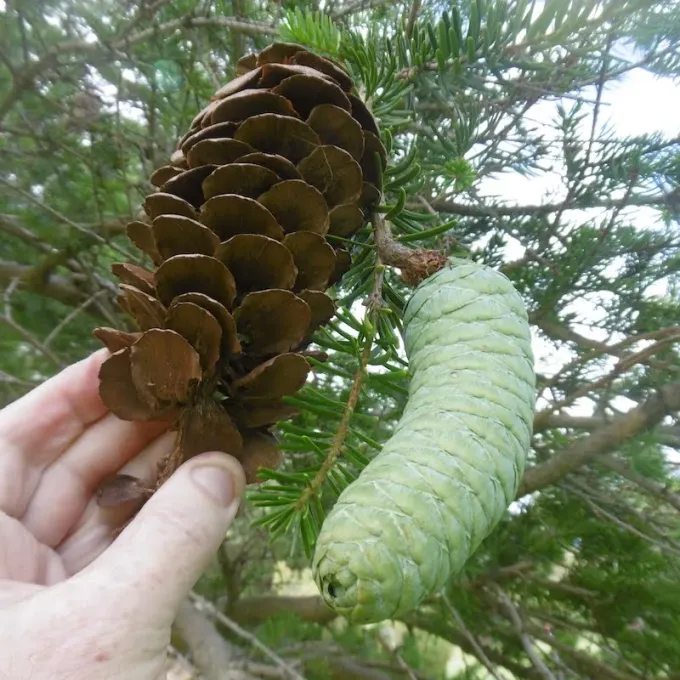
Description
Sowing dates
Propagation of Keteleeria evelyniana is primarily achieved through seeds harvested from mature cones. Seeds require a cold stratification period of 30 to 60 days to break dormancy and ensure uniform germination rates in nursery conditions.
The optimal germination environment involves a well-draining, sterile soil medium. Seeds should be sown at a shallow depth of about 1 centimeter and kept in a shaded area to maintain consistent moisture levels without waterlogging.
Seedlings are highly sensitive to intense sunlight during their first year of life. Providing 50–70% shade coverage is essential to protect the young plants from heat stress and desiccation of the delicate needles.
Transplanting into the field is best performed after 2–3 years of nursery growth. Great care must be taken to maintain the integrity of the root ball to preserve essential mycorrhizal associations that support the tree's development.
Standard spacing in plantation forestry is typically set to allow for adequate canopy development, usually requiring 2 to 3 meters between individual trees, depending on the site fertility and management objectives.
Growing requirements
Keteleeria evelyniana is a large evergreen conifer belonging to the Pinaceae family. It is naturally adapted to subtropical climates that offer consistent humidity and stable temperatures throughout the growing season.
The species requires deep, fertile, and well-drained loamy soils. It is particularly intolerant of stagnant water, which rapidly induces root rot and stunted growth, making site selection a critical factor for success.
Altitudinal range for optimal growth typically spans from 200 to 1,500 meters above sea level. In these regions, the tree benefits from cloud cover and high humidity, which help mitigate the stress of dry spells.
Light requirements shift as the tree matures; while young trees need significant protection from full sun, mature specimens are moderately light-demanding and thrive in canopy gaps or open forest environments.
Protection from extreme wind is necessary to prevent structural damage, as the wood of young Keteleeria can be prone to bending or breakage during severe storms if the canopy is not well-developed.
Yield
The primary economic value of Keteleeria evelyniana lies in its high-quality timber. The wood is prized for its durability, resistance to rot, and attractive grain, making it suitable for construction and furniture making.
Beyond timber, the species is frequently employed in reforestation projects to stabilize mountain slopes. Its extensive root system prevents soil erosion and landslides in susceptible geographical areas.
In landscaping and ornamental forestry, the tree is valued for its majestic stature and deep green foliage. It is often planted in large estates or botanical gardens where it has enough space to display its full form.
Yield production in forestry plantations is highly dependent on systematic silvicultural treatments. Thinning processes should be conducted to focus growth energy on the highest-quality stems within the stand.
With proper management, the tree achieves substantial biomass production over a long life cycle, providing a sustainable resource for wood industries while simultaneously sequestering significant amounts of carbon.
Main diseases and pests
Fungal pathogens, particularly those affecting root systems and stems, constitute the primary threat to plantation health. High humidity combined with poor airflow increases the risk of infection significantly.
Various insect pests, including bark beetles and needle-eating larvae, can cause widespread damage if not monitored. Weakened trees, particularly those in drought-stressed sites, are the most susceptible to infestations.
Environmental stressors such as air pollution and prolonged soil moisture deficits can drastically weaken the tree's immune system, leaving it exposed to secondary attacks by pests and diseases.
Rodent damage to the bark of young seedlings can be devastating in nursery and early plantation stages, potentially girdling the stem and killing the plant before it establishes a strong root system.
- Implement regular sanitary thinning to remove diseased wood.
- Use integrated pest management to monitor insect population levels.
- Ensure proper site drainage to avoid waterlogged conditions.