
Vejar fir
Abies vejarii
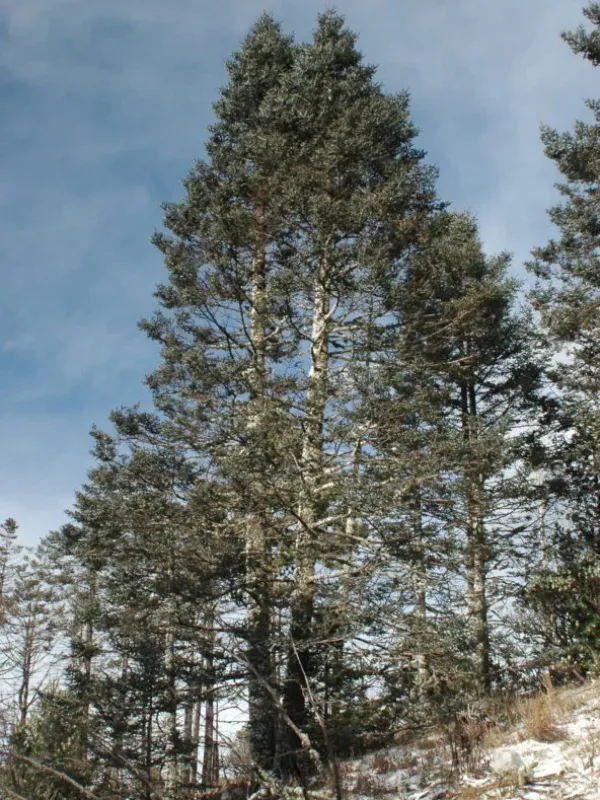
Description
Sowing dates
Propagation of Abies vejarii in nurseries is primarily carried out by seed. Sowing takes place in autumn or spring after a stratification period lasting 30 to 60 days in cold, moist conditions to break dormancy.
For successful germination, the soil mix must be light, nutrient-rich, and well-draining. Seeds should be sown at a depth of 1–2 centimeters, maintaining consistent moisture levels until seedlings emerge.
During the first two years of life, saplings require shading, as direct sunlight can scorch young needles. Using shade cloths or protective covers is essential to create a favorable microclimate for root system development.
Transplanting to a permanent location is best performed at a young age, as the fir has a taproot system that is sensitive to disturbance. Early spring, before the onset of active sap flow, is the optimal time for transplantation.
While vegetative propagation through cuttings is practiced in industrial forestry, it requires growth regulators and strict humidity control to achieve a high rooting percentage.
Growing requirements
Vejar fir (Abies vejarii) belongs to the Pinaceae family and is an evergreen tree endemic to the mountainous regions of Mexico. It naturally grows at high altitudes, which grants it a high level of adaptability to cool and humid climates.
The species prefers deep, nutrient-rich, loamy soils with a moderately acidic to neutral pH. A crucial condition for its health is the absence of waterlogged soils, as stagnant groundwater can lead to root rot and tree mortality.
The tree features moderate frost resistance, meaning it needs protection from severe winds in regions with harsh winters. During summer, the tree thrives with adequate atmospheric humidity and protection from extreme heat.
Agrotechnical maintenance includes regular loosening of the soil around the base and mulching. Mulching with pine bark or peat helps retain moisture and suppress weeds, which is critical for the survival of young saplings.
Vejar fir has specific light requirements: while it is shade-tolerant when young, adult specimens need sufficient diffused sunlight to maintain a dense and aesthetically pleasing canopy structure.
Yield
The economic use of Vejar fir is focused on ornamental landscaping and reforestation in suitable temperate zones. Unlike traditional agricultural crops, its yield is measured by biomass accumulation and timber quality over time.
In favorable conditions, the annual height increase ranges from 20 to 40 centimeters. The timber is valued in furniture production and construction for its lightness, lack of resin ducts, and ease of processing.
In landscape architecture, the species is valued for its aesthetics, including dark green needles and decorative cones that appear on mature trees. This makes it a high-potential crop for specialized forest nurseries.
Yield indicators also encompass seed production for forest restoration projects. Cone production is dependent on the tree's age and environmental conditions, with significant fruiting beginning after the age of 15–20 years.
The long-term economic effectiveness of Vejar fir cultivation stems from its longevity and high market demand for premium-quality coniferous nursery stock used in park development.
Main diseases and pests
The primary threats to this culture are fungal diseases, which proliferate in conditions of high humidity and poor air circulation. Fusarium wilt and various forms of root collar rot are common causes of sapling death.
Among pests, needle-eating insects and sap-sucking parasites, such as aphids and spider mites, cause the most significant damage. These pests not only weaken the tree but can also act as vectors for viral infections.
Proactive treatments with broad-spectrum fungicides are recommended to prevent the spread of diseases. Ensuring proper spacing is crucial to prevent overcrowding, which in turn improves canopy aeration and reduces pathogen pressure.
During dry spells, the risk of infestation by bark beetles and other wood-boring insects increases. Proper irrigation and overall tree vitality serve as the best defenses against these entomological threats.
Common issues include the following:
- Fungal needle cast diseases
- Root rot pathogens
- Aphid and spider mite infestations
- Winter bark damage caused by rodents