
Arnold fir
Abies arnoldiana
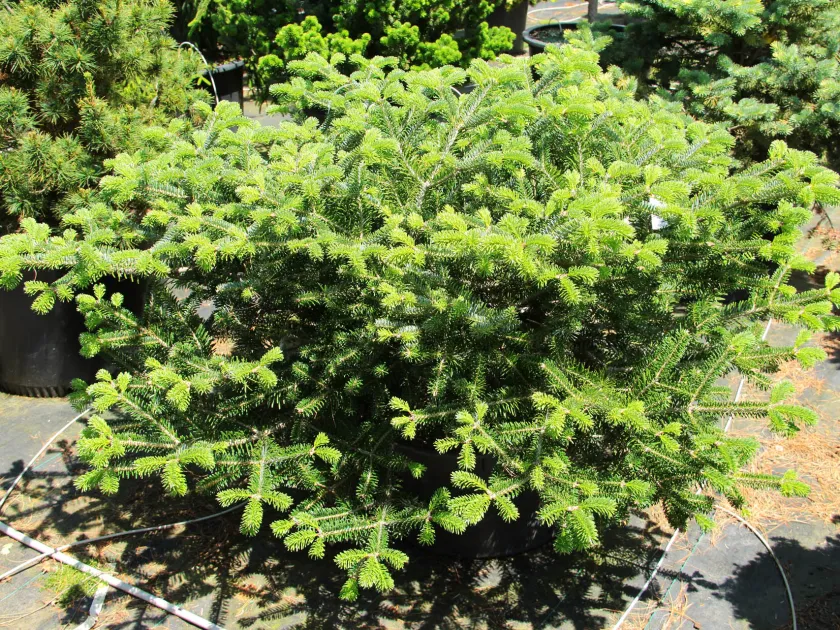
Description
Growing requirements
The Arnold fir (Abies arnoldiana) is a hybrid conifer originating from the cross-breeding of Abies koreana and Abies veitchii. It belongs to the Pinaceae family and is primarily cultivated as a high-value ornamental plant.
This species thrives in temperate climates. It prefers locations with partial to full sun exposure, which ensures the development of its characteristically dense and vibrant needles throughout the year.
Regarding soil requirements, the Arnold fir performs best in fertile, slightly acidic, and well-drained loamy soils. It is critical to avoid waterlogged areas, as the root system is prone to hypoxia in standing water.
General maintenance includes regular mulching of the root zone. This practice helps to regulate soil temperature, suppress weeds, and maintain essential moisture levels, particularly during the establishment phase of the tree.
It is important to provide sufficient space for the tree to grow, as the Arnold fir can reach significant dimensions. Ensuring good air circulation around the crown is an essential part of its long-term agronomic care.
Main diseases and pests
The Arnold fir can be susceptible to aphids, particularly adelgids, which often appear as small white cottony tufts on the undersides of the needles. Effective control involves using dormant oils or insecticidal soaps.
Fungal infections, such as needle cast (needle blight), are common when air circulation is poor or humidity levels remain excessively high for prolonged periods. Sanitation and thinning of the branches are recommended.
Root rot caused by Phytophthora species can be a major threat if the soil drainage is inadequate. Always verify soil drainage capability before planting to prevent this serious physiological problem.
Spider mites are another common pest that tends to thrive in hot and dry conditions. Regular misting of the foliage can act as a natural deterrent against these tiny pests.
Environmental stress, such as severe drought, can predispose the tree to various opportunistic pathogens. Providing consistent irrigation during the peak growth season is the best defense against tree decline.