
California Red Fir
Abies magnifica A. Murray bis
Description
Growing requirements
California Red Fir (Abies magnifica) belongs to the Pinaceae family and is native to the mountain ranges of southwestern Oregon and California. It is a noble conifer that thrives in high-altitude environments, usually between 1,400 and 2,700 meters above sea level.
This species prefers deep, moist, well-drained soils and requires a climate characterized by cool summers and snowy winters. It does not tolerate prolonged drought or high heat, making its cultivation area somewhat limited to temperate mountainous regions.
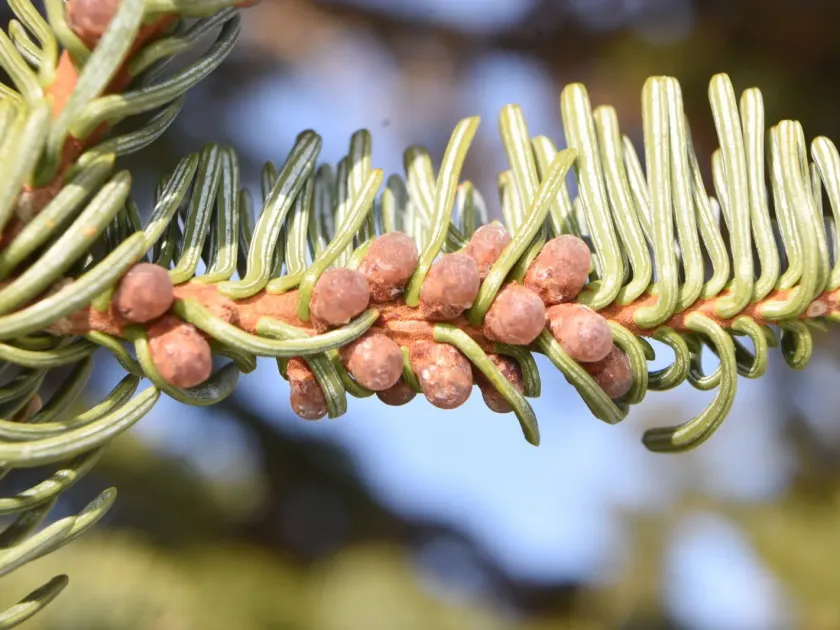
Botanically, it is identified by its distinct silvery-blue needles that curve upward. The tree develops a strong, symmetric pyramidal crown. A notable feature is its large, dark purple-brown cones that stand erect on the branches, distinguishing it from other fir species.
In terms of agricultural and forestry use, the California Red Fir is highly valued for its quality timber, used in construction and framing. It is also a popular species in landscaping, prized for its regal appearance and symmetry when planted in open spaces.
Cultivation success depends on providing adequate spacing for mature trees, as they require significant room for canopy development. Young specimens benefit from partial shade, while established trees perform best with full exposure to sunlight.
Main diseases and pests
The fir engraver beetle (Scolytus ventralis) represents a primary biological threat to established forests, often attacking trees weakened by water stress, which can lead to significant mortality rates within a stand.
Root rot, particularly caused by Phytophthora species, poses a severe risk in areas where drainage is insufficient, often causing the decline of trees regardless of their age or size.
Dwarf mistletoe is a parasitic plant that can infect California Red Fir, gradually draining the host's vitality and creating entry points for secondary wood-decaying fungi.
For pest control, integrated management strategies are recommended, focusing on maintaining tree vigor through thinning and ensuring optimal site conditions to reduce stress.
Regular monitoring for discoloration of needles or resin streaks on the bark is crucial, as these are often the first visible signs of infestation or fungal infection requiring immediate intervention.