
Leptospermum scoparium
Leptospermum scoparium J. R. Forst. & G. Forst.
Description
Growing requirements
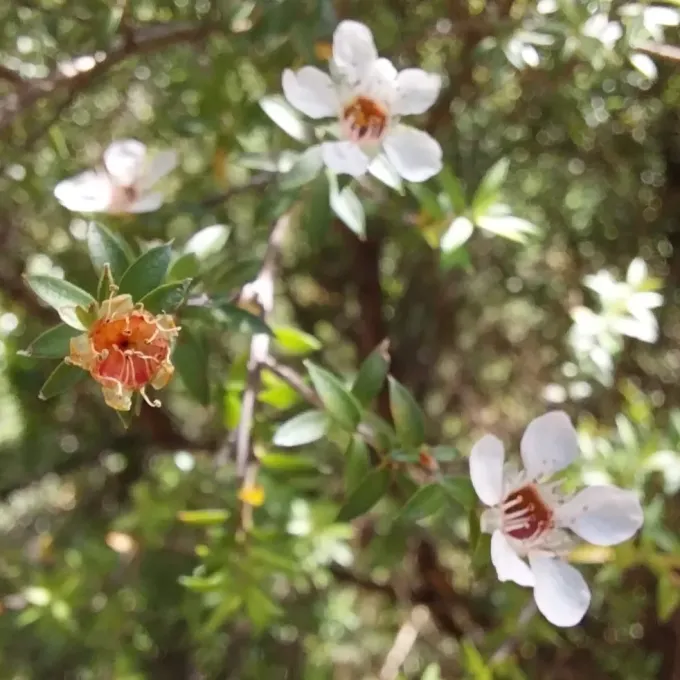
Leptospermum scoparium, commonly known as Manuka, is a perennial evergreen shrub belonging to the Myrtaceae family. Originally native to New Zealand and southeastern Australia, it is highly valued for its nectar, which produces the world-renowned manuka honey.
This crop thrives in temperate to subtropical climates and requires full sunlight for optimal flower and oil production. It is not frost-hardy and requires a protected environment or greenhouse cultivation in colder regions.
The soil requirements for Leptospermum are specific: it prefers acidic, well-draining soil. It is highly intolerant of waterlogging, which often leads to root rot. Soils should be rich in organic matter but light enough to prevent compaction.
Agronomic management involves maintaining consistent moisture levels while ensuring the soil surface dries out slightly between watering sessions. Using hard water is detrimental; therefore, filtration or rainwater irrigation is recommended for commercial farms.
The economic value of this species is driven by the global demand for manuka oil and specialty honey. Careful management of plant density and pruning practices helps in maintaining vigorous growth and higher yields of vegetative matter for oil distillation.
Main diseases and pests
Root rot, primarily caused by Phytophthora species, is the most critical threat to Manuka plantations. It occurs in poorly drained soils and spreads rapidly in wet, warm conditions.
Pests such as spider mites and scale insects are common in greenhouse environments. These pests can significantly reduce plant vigor and photosynthetic capacity if left untreated.
Management of these threats involves strict sanitation protocols, ensuring proper airflow around the plants, and the use of preventative fungicide applications in high-humidity periods. Early detection is vital for preserving the crop health.