
Leptospermum scoparium and Leptospermum rotundifolium hybrids
Hybrids between Leptospermum scoparium and Leptospermum rotundifolium
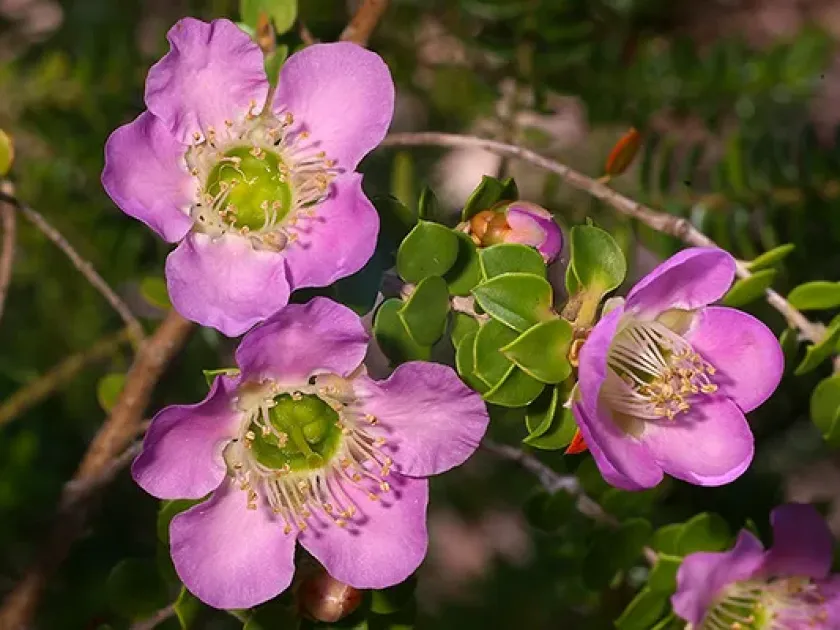
Description
Growing requirements
Hybrids derived from Leptospermum scoparium and Leptospermum rotundifolium belong to the Myrtaceae family. These evergreen shrubs are prized for their spectacular floral displays and dense, needle-like foliage, which bring a distinct aesthetic to Mediterranean-style gardens.
Native to Australia and New Zealand, these hybrids have been bred to combine the resilience of L. scoparium with the larger, more aesthetic blooms of L. rotundifolium. They thrive in climates that mimic their native temperate-to-warm environment.
The core requirement for successful cultivation is a well-draining, acidic soil medium. They are particularly sensitive to high phosphate levels and do not tolerate alkaline conditions, which often cause chlorosis and stunted growth.
In terms of light exposure, these hybrids demand full sun to thrive and bloom effectively. Insufficient light leads to "legginess" and significantly reduces the flower count during the spring and summer months.
Maintenance involves precise watering practices; the soil should be kept consistently moist but never waterlogged. Using a high-quality, porous potting mix is essential for container-grown plants to ensure optimal root aeration and development.
Main diseases and pests
The most significant threat to Leptospermum hybrids is Phytophthora root rot. This pathogen thrives in saturated soils and can lead to rapid decline and death of the plant within a short timeframe.
Scale insects and mealybugs are the primary pests that affect these shrubs. They tend to congregate on the stems and leaf axils, leading to the development of sooty mold due to honeydew excretion.
Spider mites can become a problematic issue during hot, dry periods or in indoor winter quarters. Regular inspection of the undersides of leaves is vital for early detection and mitigation.
Cultural control, such as improving ventilation and avoiding overhead irrigation, is the best strategy for managing humidity-related fungal issues that occasionally plague dense foliage.
Should chemical intervention be necessary, use horticultural oils for soft-bodied insects and avoid broad-spectrum pesticides that could harm beneficial pollinators attracted to the nectar-rich flowers.