
Leptospermum (L. scoparium x L. macrocarpum hybrid)
Hybrids between Leptospermum scoparium and Leptospermum macrocarpum
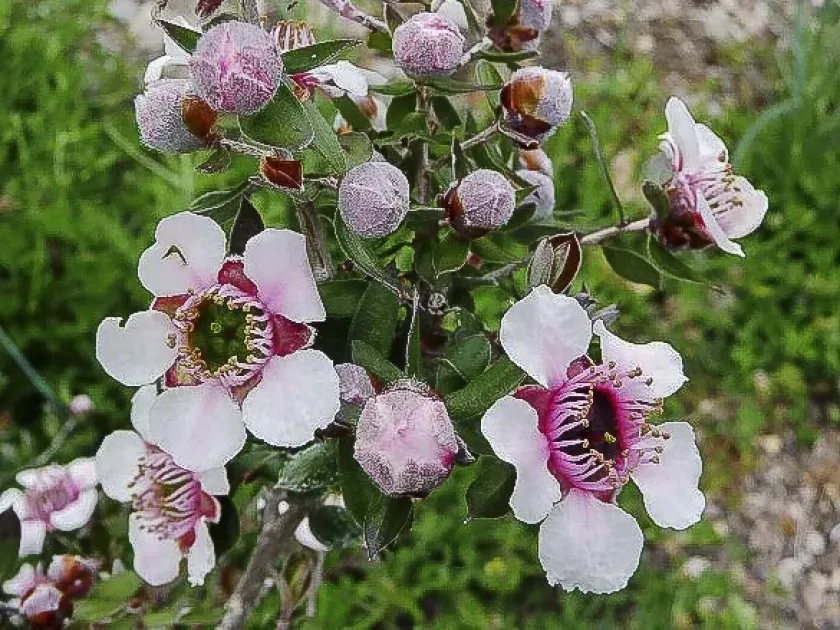
Description
Growing requirements
The hybrid resulting from the crossing of Leptospermum scoparium and Leptospermum macrocarpum is a prized ornamental shrub belonging to the Myrtaceae family. It is distinguished by its vibrant, oversized flowers and lush, dense foliage, making it a standout in gardens.
To cultivate these hybrids successfully, a well-draining, acidic soil profile is essential. The plant is highly sensitive to waterlogged roots, which can be fatal; therefore, ensuring optimal drainage via gravel layers or raised beds is a fundamental agrotechnical requirement.
The plants thrive in full sun, which promotes dense flowering and strong growth. While they prefer mild climates, they can tolerate light frost, provided they are sheltered from cold, drying winds that can damage the evergreen canopy.
Proper water management involves keeping the soil consistently moist but never waterlogged. Using soft, slightly acidic water for irrigation helps maintain soil pH levels, preventing nutritional deficiencies that often manifest as yellowing leaves.
Regular maintenance pruning is critical to prevent the plant from becoming leggy. Trimming the tips immediately after flowering encourages branching, leading to a more robust, compact structure that will yield more blossoms in the subsequent season.
Main diseases and pests
Root rot pathogens, particularly Phytophthora species, represent the most significant threat to these hybrids. These fungi thrive in wet, stagnant soil conditions and can rapidly destroy the root system of the plant.
Scale insects and mealybugs are the most common pests encountered in cultivation. They congregate on stems and leaf nodes, debilitating the plant by extracting sap and producing honeydew, which attracts secondary fungal infections.
Spider mites are a particular concern during hot, dry weather conditions, especially in container-grown plants. They feed on the underside of leaves, causing discoloration and eventual leaf drop if left unmanaged.
Effective pest control strategies include the use of horticultural oils or systemic insecticides. Regular scouting is recommended, as early detection prevents the formation of massive colonies that are much harder to eradicate.
Ensuring good air circulation and avoiding overhead watering during humid periods are vital cultural practices that help reduce the incidence of both fungal diseases and insect infestations.